Cultural Alignment

Teaching and Training Concepts |
Guest
Culture and Trust Aerial Arts Article The Intersection between local country culture and aerial culture

If you’ve been reading our newsletters and social media posts you know that we have taken on world domination exploring Finland. We’ve been thinking a lot about the local culture in Finland and how it intersects and differs from our aerial culture. In many ways, Finland feels a bit like a huge Aerial Fit studio to us, and that’s probably why we feel so at home here!

Not only do we feel comfortable here, we feel like we can thrive. In our aerial studio we worked hard to create an environment where our students could thrive, and we see so many parallels that we decided to write about it.

*edit: Finland isn’t perfect (no country is), but we have the sense they are actively trying to put people before profits. We are not experts on Finland, we are just excited visitors who also happen to love aerial.

There are a lot of parallels between the way we ran our aerial studio and the way the culture operates here.

It Starts With Trust

If you’re an aerialist, you know that trust means everything. When we ran our aerial studio we put A LOT of effort into creating a culture of trust that flowed in all directions. Our students needed to trust us, because aerial can be scary and vulnerable, and it can result in some pretty gnarly injuries in the worst case. We needed to trust our students to be honest with us, follow our studio rules, and listen to our instructions for the same reason. And of course all of our teachers needed to inspire trust as well.

Creating that culture of trust came down to a million little things in addition to the bigger, more obvious things. The culture of trust we created worked so well that it eventually sustained itself! In our studio all of our students knew what to expect and how to behave, so all of the new people who came in were immersed in that culture of trust right from day 1.

The Finnish Culture has also been built around trust. And we see it in a million little things too. Here’s an example: when you walk into a restaurant, museum, or any other public space there are coat racks and hooks for bags. And people hang up their coats, put their bag on a hook and then… they just walk away. They don’t lock them up. They don’t haul them around with them. They know everything will be waiting for them when they come back. Talk about a little thing that is also huge. Yes, this is convenient, but imagine how this carries over to other day-to-day interactions.


What little things happen in your classes or training sessions that turn out to be huge?

Trust is a skill: It can be valuable to think of trust as part of the curriculum. It can be taught with the same importance as any other skill in the curriculum. It can be revisited over time for deeper understanding. It can stylized to fit one’s unique style. It can also be done wrong if not given the right attention.

Trust is built with clear boundaries: Trust is created by saying “yes” and “no”, by saying “that’s right” and “that’s wrong”, by saying “follow me” and “I was wrong”. And all of this hard work can be undone by being inconsistent or showing favoritism.

Trust shows up in teaching styles and progressions: We’d rather take our students through “extra” progressions that may not be necessary, than skip something that leaves them feeling uncertain, out of control, and unsafe.

Trust also means learning to trust the apparatus and your own body: That’s why we emphasize supports when we teach. We want our students to learn to trust how the apparatus works and how their body can hold them in the air. This is the crux of aerial and so much more valuable than simply trusting something will work just because the teacher said so.

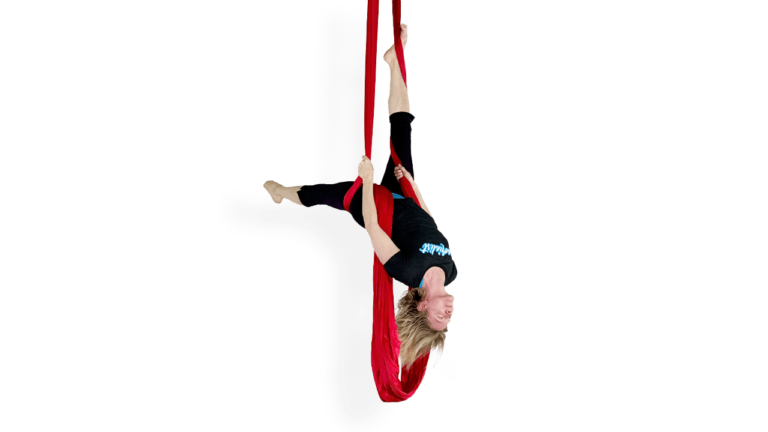
How do you make sure that trust building (in both directions) is built into drops like these?

Level 2 |
Drops & Dives
Level 2 |
Drops & Dives


Trust does not mean “Do what I say.”

In aerial blind trust can be dangerous, because we put our life and well-being in the hands of riggers, teachers, classmates, and partners to do what we do in the air. To do that we need to have real, organic trust in all of those people. And those people need to trust us in return.

Have you ever noticed that Aerial inspires fast friendships just for this reason?
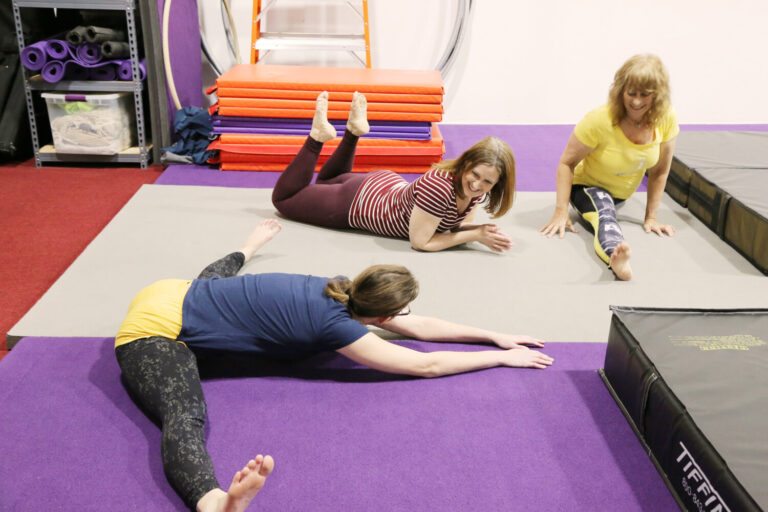
Finland has an intense sauna and cold plunge culture. They frequently and happily go from saunas set to 90-100°C (195-212°F) to slipping into the Baltic Sea which is often frozen over with a water temp of 0°C (32°F). While it is intense, it is never, ever a competition. If you ask them how long to stay in the sauna or the water, they tell you to let your body decide. There isn’t a right amount of time, and there’s no pressure to stay longer. They also don’t bully or peer-pressure people into the sauna or water. They will congratulate tourists on just trying it. And they ask for permission before making the sauna hotter.

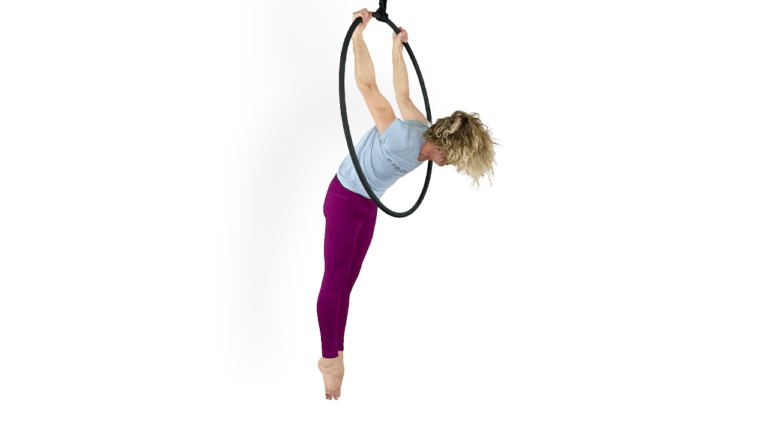
 

How can you facilitate the growth and maintenance of trust in your aerial classes?

Be honest: Teachers do not need to know everything. When a student asks you a question you don’t know the answer to, be honest and let them know you’ll look into it and get back to them later, or refer them to a better source.

Be adaptable: Teach to the student that is in front of you, not the student you expected when you made the class plan. Be ready to change gears completely if necessary.

Keep the lines of communication open: Ask your students for their feedback. How does this cue feel to their body? Would they like to do it a different way? Where does their body want to go next? Be a partner with your students, not a drill sergeant.

Be open: Let your students know that you are human as well, and let them see you learn and improve. This is a great way to gently guide your students towards the aerialist you want them to be.


How can you facilitate the growth and maintenance of trust in your own training?

Be curious: Treat your body like a partner, not just a tool. Do you trust your shoulders (or insert other body part here)? What have you done to maintain that trust? Do you take care of that body part to keep it strong and healthy?

Be adaptable: Train to where you are in this session, on this day. Gently guide yourself forward over months and years, not minutes and hours.

Listen to your body: If your shoulders could talk, would they trust you? If you slow down and evaluate you can hear your body talk to you. What is it saying?


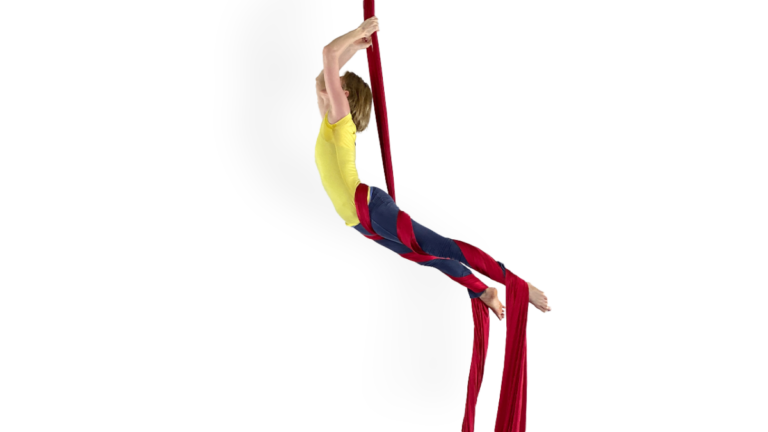
How could you facilitate productive growth towards more complex aerial skills like these? 

Level 3 |
Miscellaneous
Level 3 |
Top Bar
Level 2 |
Above the Loop


Bubbles of trust

We love that in the US we were able to create a little bubble of safe space for our community. But over time the strong trust bonds we built in our community only highlighted how little we trusted the larger general community while we were living in the southeastern US.

We were sad to leave our studio behind and it was a hard decision. But we wanted to expand our bubble, and being in Finland has reminded us that it is possible to have a society built on trust. When people are put first amazing things can happen.

Why stay in a small bubble if you can go bigger?

Leave a Reply

Your email address will not be published. Required fields are marked *