Create Your Own Combos & Sequences

Teaching and Training Concepts |
Guest

We’ve added a new feature to the Sling Tutorials called Aerial Combinations. All of the skills listed in this section combine really well with the current tutorial. This is not AI or some creepy algorithm. For every skill in our library we hand enter all of the data and we use our decades of teaching and choreographing experience to determine which skills belong in the combos section.

This section is all about giving you the tools to be creative! If our Sling lovers like it enough, we will eventually add this Combos section to all of our libraries.

More room for you to be you

Creating our own combos, phrases, and sequences brings us so much joy we are always excited to inspire more of it in our students. Of course we love developing step by step sequences that we teach to our students (or perform ourselves), and those are not going away. The Combos section is adding one more option that is a very different process.

This is open ended learning.

That means there is room for you to craft something that matches your current reality. You, and your students, have your own unique goals, history, strengths and challenges. When you develop your own sequences and combos from that unique place, everyone wins! And there are ways to teach your students to do this, that are more useful than just saying “Go, be creative.”

We are constantly trying to make our website behave more like our teaching brains and we always take into account the student in front of us when we teach.

So let’s dive into our process. You can follow this process in the Aerial Combos section or just come up with your own combo from scratch for any apparatus.

First, choose a starting point.

The starting point doesn’t need to be the beginning of your combo or sequence. Just choose one skill, movement, or support to focus on and we’ll begin this process there.

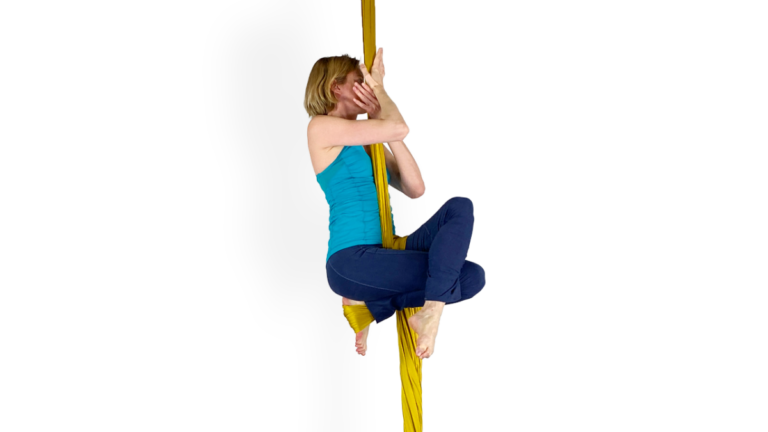
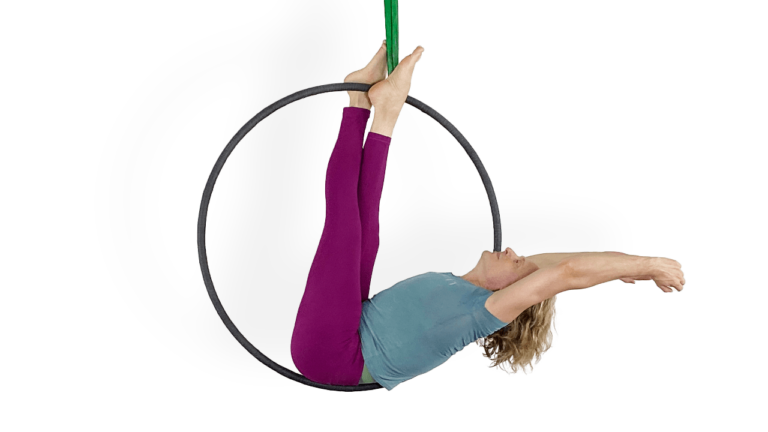
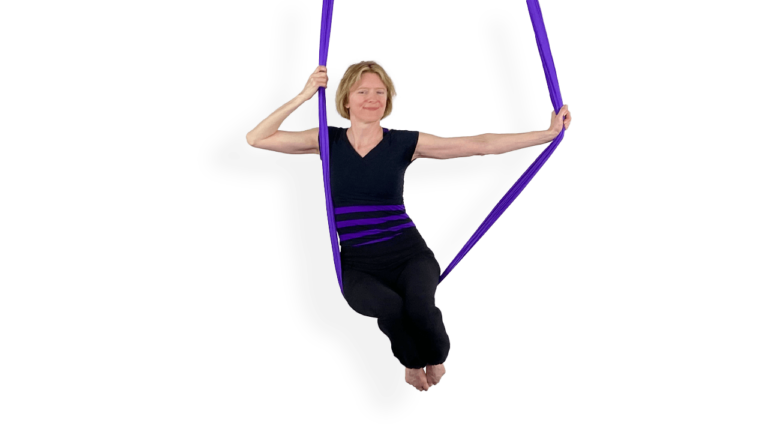
Here are a few ideas to get you started….

Level 2 |
Climbs
Level 1 |
On Bar
Level 1 |
On the Loop

Next, choose an ending point.

This doesn’t have to be the literal end of your combo. Simply choose where you would like to end up. Here are a few options to consider.

  • I want to end up higher on the apparatus.
  • I want to end up lower on the apparatus.
  • I want to end up in a resting position.
  • I want to take this into a dynamic move.
  • I want to open up the apparatus (if it’s fabric).
  • I want to change the balance point of the apparatus (if it’s steel).

Next, try a few things out.

Don’t worry about getting it perfect, editing is necessary when building sequences and we’re not at that stage yet! Remember to stay low, stay safe, and train with a coach or aerial peer. Here are a few things to keep in mind.

  • If something doesn’t work out on the first try, slow it down and try to figure out why.
  • Often learning why something didn’t work is the first step to learning why something else will work.
  • If something does work out nicely, try to define what it is that you like about it. Is it a direct transition? A roundabout meandering?

Next, grab a buddy or a camera and repeat what you found that you liked.

Take your time here. Here are our recommendations to get the most out of this step.

  • Go as slow as you can and find as many pausing places as you can. These pausing places are where you can change things or go in a different direction.
  • Be attentive to your supports. Notice what you can do with each support and be curious about how it is holding you up in the air.
  • Train low so you can step to the ground at any point.
  • Use your buddies eyes and take feedback, or look at your video closely and see what you notice.

Next, check in.

If you love this transition you found, then here’s where you can decide to continue on, or reevaluate and try something different.

When you’re creating your own combos and sequences, expect many failed attempts. We don’t mean accidents of course, we simply mean you thought something would work and it didn’t. Or, you wanted to do something and that skill you chose just wouldn’t let you do that thing you wanted. This is all part of the process. It’s expected and it’s important.

Found something you like?

Great! Your work is not yet completed. How it’s time to try that thing you found that you like in different ways. See how many different possibilities are hidden in it. Here are some ideas to play with.

  • Can you change the tempo?
  • Can you change the pausing places?
  • Can you do it in reverse?
  • Can you go a completely different way?
  • Can you find a different body pathway to the same supports?

Try it on an aerial peer.

Grab your training buddy and see how your creation feels on them. Can you see what’s happening on a different body than your own? What might need to change for that body?

Celebrate and enjoy it!

This is important! Take a moment to celebrate your newfound creation by getting a great video, taking great notes, and if you like, sharing it with close friends or the wider world of the internet.

And remember, even if this move already exists someplace else, it’s still something you discovered through your own unique process. And your body does it at least a little bit differently than anyone else’s.

How our library can help this process.

Combos & Sequences

All of our libraries contain sequences that we’ve put together through this process or a similar one. And, our Sling library now offers a new section too!

Combos With

This section contains our suggestions of a number of skills that will combo easily with the skill you’re looking at. For example, let’s say your favorite aerial skill starts at point A and ends at point C. This section contains different skills that either start at point C (so you can combo them at the end of your skill), or end at point A (so you can combo them before your skill).

Some of these might be very obvious and some might be not so obvious at first glance. The fun is in playing around and seeing what can lead where. Our library now has one more tool to help you do that.

Want to Get More Out of Your Tutorials?

Already a member?
Log in and open your next tutorial. Take a look at the Sequences and Combos section. There might be an idea in there to inspire you or your students.

Not a member yet?
Join us today and unlock every tutorial — cross-linked with all the building blocks, related drills, progressions, sequences, and more. It’s not just a library — it’s a full learning system.

Have questions or want help getting started?
Send us a message. We genuinely love chatting about this stuff — whether it’s a quick question or a deep dive into your training.

Leave a Reply

Your email address will not be published. Required fields are marked *