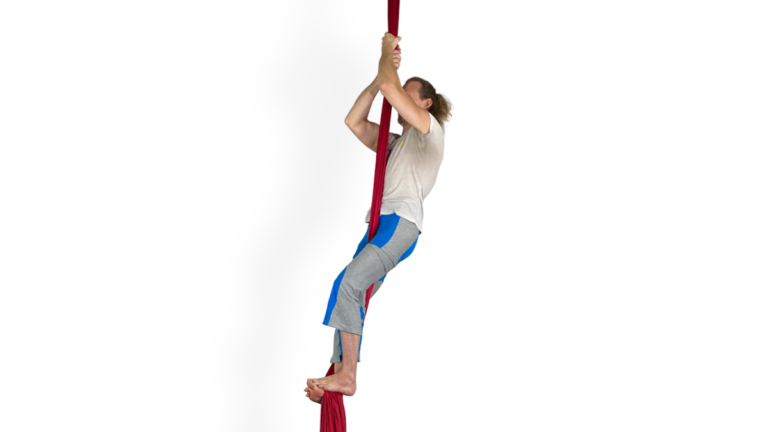
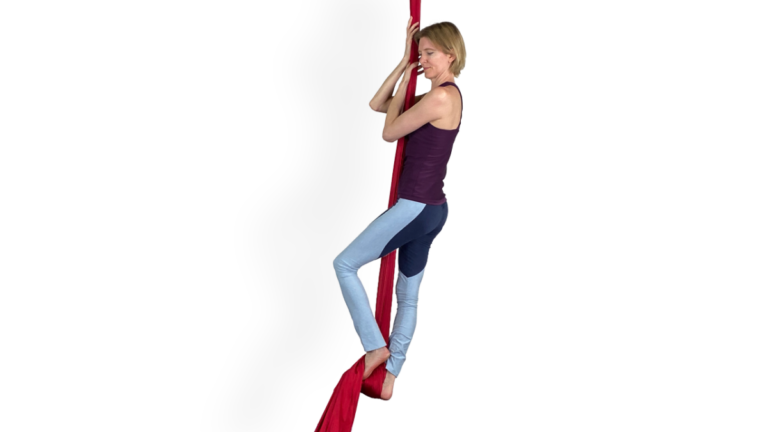
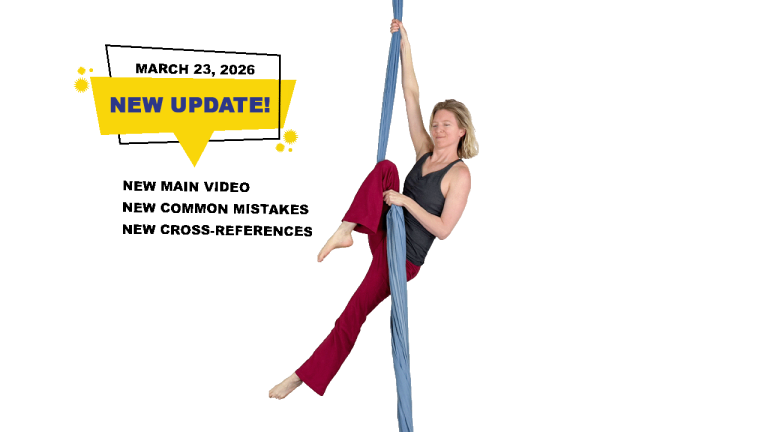
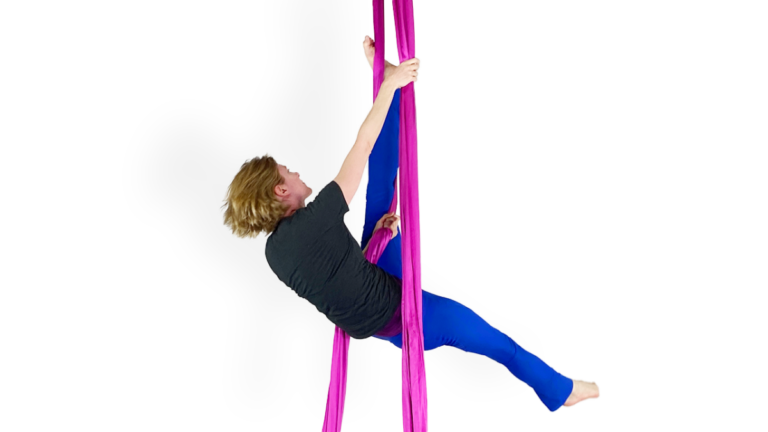
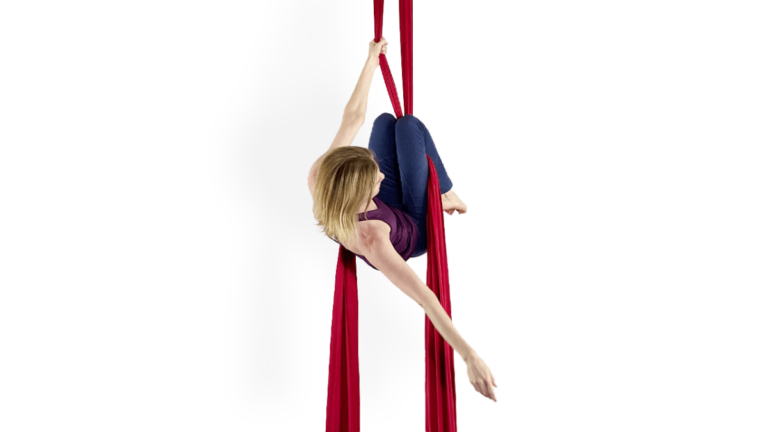
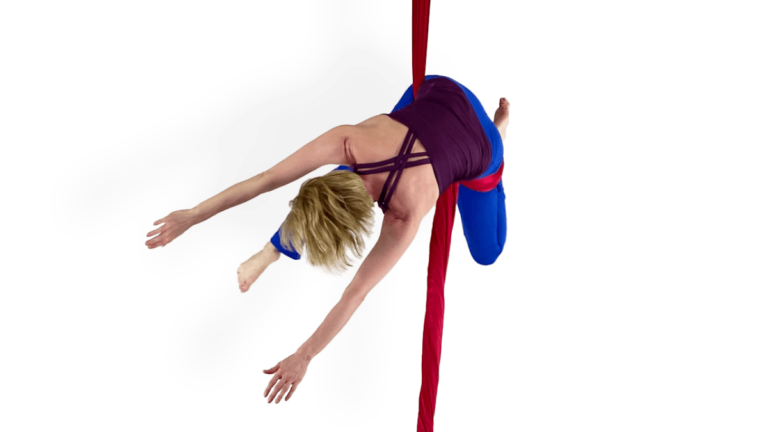
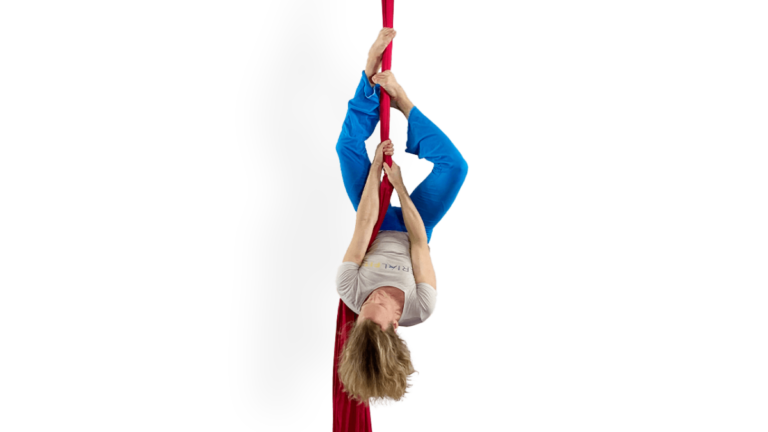
An aerial climb (or “Climbing the Silks”) is a basic aerial silks skill that you’ll need to master in order to train as a serious aerial fitness student. Climbing is also a skill that gives beginner aerialists a lot of trouble. For this reason, Climbing is one of the first categories of skills we teach aerialists and aerial silks teachers here at AFO, and is an important building block to more advanced aerial skills.
As with all aerial silks and circus training skills, which by nature carry some safety risks, teaching aerial skills safely is our first priority. That’s why it’s crucially important for beginners to start slow and master the basics before trying new skills.
Basic Silks Climbs
There are several different ways to climb the aerial silks, with varying degrees of difficulty. As always, beginner aerialists need to start building out their skills slowly and safely.
Basic Climb, also called Classic Climb, is the first climb we teach to our new beginner students. It’s such an important fundamental that we spend a lot of time and find a lot of ways to make mastering it fun. Even within Basic Climb there are so many different variations of it, and this version works the pull-up and the leg lift evenly.
Our beginner level students learn this climb, and our intermediate and advanced level students still practice it at least in their aerial warm-up.
In addition to teaching the basics of climbing, Basic Climb also leads to Figure 8 Footlock. Mastering this climb is a key part of our beginner level curriculum.
Russian Climb, also called Step Climb, is a very popular climb and it leads to all sorts of fun variations. This video focuses on the basics of the Russian Climb that we teach our level 1 students. Although this climb is very efficient for many students, we wait until students are confident with Basic Climb and Inchworm Descent before teaching Russian Climb. The climbs are very different and both important to master.
Once Russian Climb is strong then students typically enjoy working on some of the many variations of it including Big Russian, Russian Flirt, Russian Somersault, Russian Pirouette, and so many more. Mastering this basic Russian Climb makes all of those variations come easier.
A huge variety of climbs.
Once students have mastered the basic climbs, it is time to start learning more climbs. As the students gets stronger and begins to understand more and more aerial theory the climbs can get fantastically creative and seemingly gravity defying.
Opposite Side Climb is a classic inverted climb and we consider it a great tool for students to keep developing stronger knee hooks and straddle ups as well.
Our teaching tips focus on making the climb efficient, and at the same time building good aerial habits for all the fun skills that come after. Getting a good strong knee hook high above the hands, maintaining support in the knee pinch to gain height to climb high above, and also dropping the fabric off nicely to continue up into the next climb are all very important components that our progressions focus on.
Opposite Side Climb is something we teach once students are comfortable in their straddle ups. At a higher level it’s a climb that is usually included as part of an aerial warm-up.
Creature Climb is one of the first inverted climbs that we teach our intermediate level students, and it’s one they often use in choreography. Once students have their straddle up in the air then this climb helps them develop great crochet leg technique, which is going to help with other skills including double crucifix wrapped skills like 360 dives and stylish variations like Pillar Splits.
We teach this at the beginning of our intermediate level aerial silks classes, and then build it into more challenging variations such as CASH Climb once students have it mastered. This climb is also sometimes called Crochet Climb.
Advanced Aerial Silks Climbs
There is no limit to the possibilities when it comes to climbing on aerial silks.
Double Knee Climb is the first variation of split fabric knee hook climbs that we teach our students. We teach this at the beginning of our intermediate level once students are confident in their Inverted Tuck Ups and Inverted Pikes. This climb can be challenging to master so we’ve developed lots of drills and progressions to help students succeed.
Getting a good strong knee hook that doesn’t slide is what makes the Double Knee Climb successful. Our videos show lots of tips and tricks to achieve this or improve it. Once this version of Double Knee Climb is understood, then we introduce different variations including Double Knee Climb with Knees on Same Fabric, Teardrop Climb, Can Can Climb, and more.
Hip Key Knee Key is a fun variation of an Opposite Side Climb. It adds an extra turn on top of the hip key. We teach this after students are comfortable with their Opposite Side Climb into Hip Key, and ready for something more challenging or just different.
Even though this climb is very tied in, using a windmill hip keying action to finish the climb makes it set more comfortably so it’s a great climb to keep drilling the Windmill Hip Key action. We teach this at our intermediate level and students enjoy the novelty and fun that this climb provides.
Spider Climb is a challenging inverted climb that looks magical and is a lot of fun to teach and train. We teach this climb at the end of our intermediate level, after students are comfortable with easier inverted climbs like Opposite Side Climb and Creature Climb, for example.
Smart footwork is key for making this climb successful and this video covers tips we give our students to make it efficient. Laying the groundwork on the floor is really useful and we demonstrate that as part of our progressions.
Don’t try intermediate or advanced skills if you’re just beginning. Learning aerial arts is a long journey and a daily practice, which is why we’ve broken down our skills into progressions for you
2. Avoid common mistakes.
For each skill in our library, you’ll find lessons on common pitfalls and advice for how to avoid them. Simply scroll down the page on each video lesson.