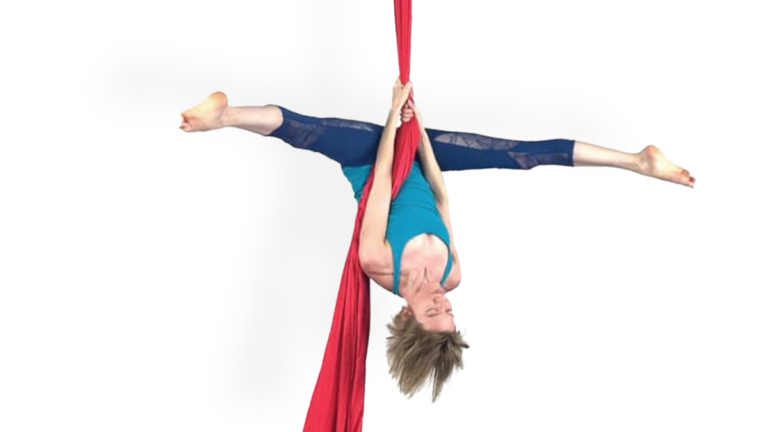
We started Aerial Fit in 2009 and trained and taught non-stop all the way to March 2020 without taking much of a break. We worked six days a week, taught an average of 15 classes a week each, trained at least an hour a day and only took two real vacations in that time (we aren’t really proud about this). We really don’t recommend this, but it worked for us and aerial has always brought us great joy.
We never stepped away from aerial, until COVID forced us to. COVID was hard for us. After months of time off, we slowly came back with an extremely reduced teaching schedule and a new 2nd full time job running our website. This really ate into our own training time, but we were still getting on the apparatus.
Then Clayton found himself with a quirky medical issue that made being on the apparatus uncomfortable. In December of 2020, he was only on the apparatus a few hours for the entire month.
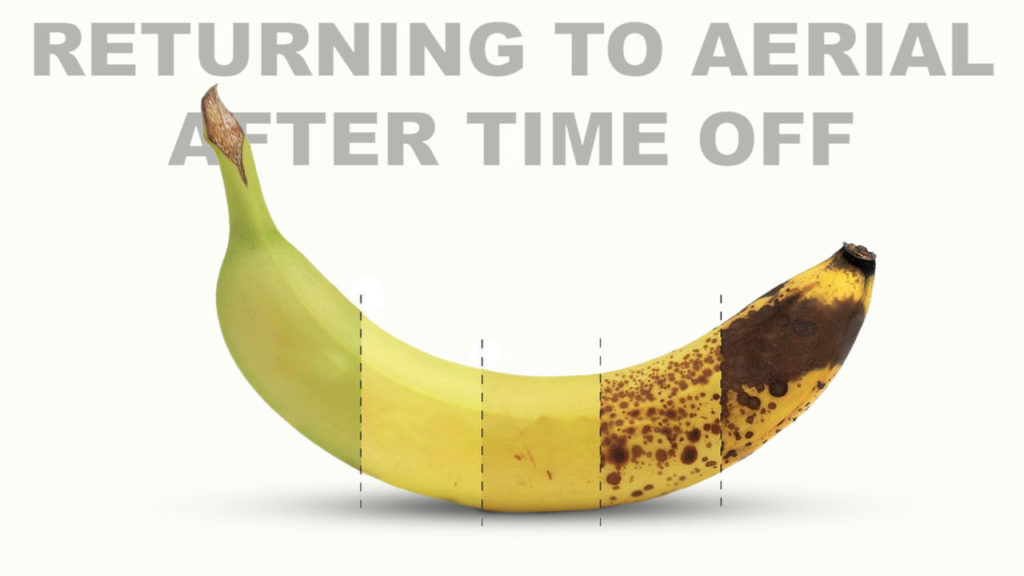
The short answer is, while you may not feel amazing the simple decision to come back to the apparatus makes you amazing. Be compassionate with yourself and try to follow this one idea.
This idea is the opposite of trying to start from where you left off and then having to take it backward a few steps. There is a lot in this idea, so here’s the breakdown of how we approach it.
It can be really valuable to set yourself in the proper context.
Any amount of time off can be physically and emotionally daunting. There can be some benefit to wrapping your brain around some of the details for a little bit of perspective.
It may be better to think of lost time as hours off rather than weeks, months or years of time. If you are forced to take a month off and you typically train for 90 minutes once a week then you are missing 6 hours of training. If you typically train for 5 hours a day, 6 days a week then missing a month means you are missing 120 hours. These are pretty extreme differences, but they are important to acknowledge
Similarly, it may be better to think of the time off as a percentage of experience. Being forced to take 1 month off the apparatus means a very different thing for someone who has been training for 13 years and someone who has been training for 5 months. The 13 year aerialist is off their pace by 0.6%. The beginner is off their pace by 20%.
And, finally, for those of you who have a lot more experience, it can be very useful to break down your training. If you’ve been doing aerial for 5 years, then you’ve been doing basic aerial actions for 5 years, but skills you just learned in the moments before your time off don’t fall into that same 5 year category. So while you are an expert at the old hat skills, you are a novice to the brand new skills and that difference can influence how those two different skill categories come back to you.
There are some really interesting ideas out there about how our bodies and brains learn skills, build skill specific strength and keep access to skills. All of these can influence how quickly things come back to you.
The concept of Learning Styles has gone out of favor to be replaced with similar, but more generalized ideas. Since we are talking about coming back to things you already know, it could be valuable to take a peek at your relationship with your skills. If you have a very logical and methodical grasp of skills you may come back to your skills differently than if you have a more intuitive sense of your skills. Neither is right or wrong and to be honest, we should strive for both a deep rooted understanding and playful intuitiveness.
There is also a bit of the mechanics of learning to consider. Our bodies change as we use them and for that matter they change as we stop using them. We gain and lose muscle mass. We gain and lose neural pathways. We can even remodel our bones to increase strength in areas under a lot of use.
This means planning ahead; it doesn’t mean hoping against expectations. One of the reasons why we love aerial is because it has so much depth to it. There is fitness and training, but also creativity, physics, anatomy and more. There are so many aspects to focus on it feels like there is always something new to learn. This is an important idea to remember and the sooner you can get started on coming back stronger the better.
Then talk to your coach (or find one online) and ask them for things related to aerial that you can train on the ground. There are many low cost pullup bars (for pullups not aerial) and many of them are designed to be installed without damaging doorways. Even though the regular gym might not seem like as much fun for you, it is still a great place to work on aerial strength, flexibility and mobility. You can take ballet classes so you never have to ask what you should do with your arms when they aren’t busy holding you up. You can take clowning classes to better understand how to connect to your audience.
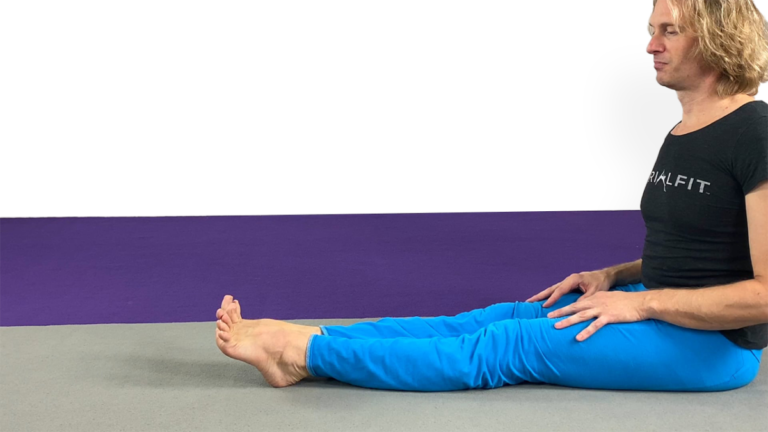
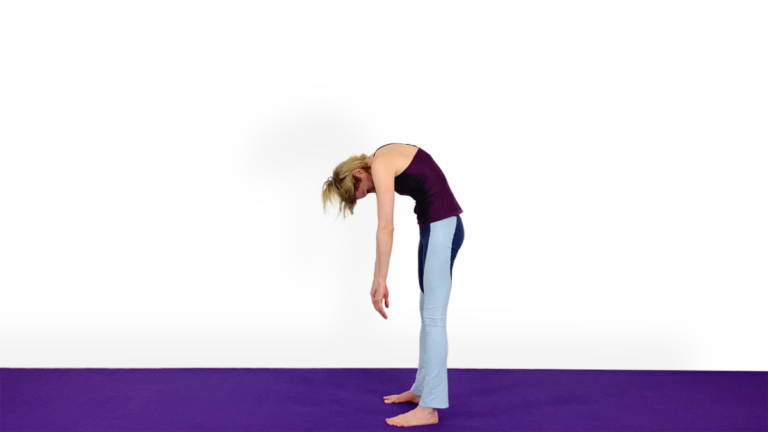
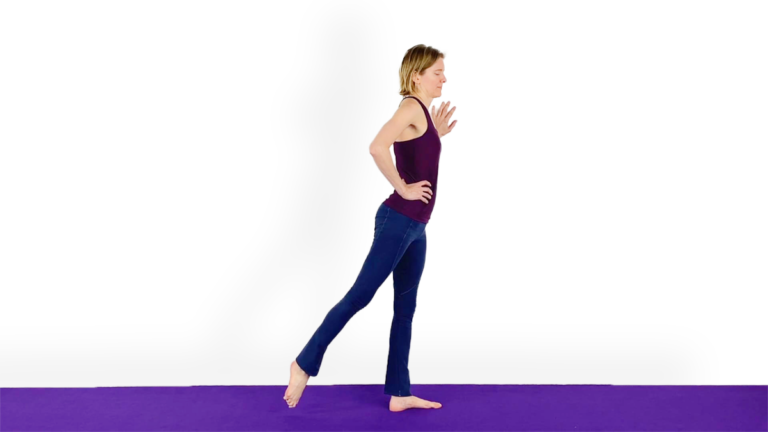
There are all sorts of ways to stay in shape for the apparatus while off the apparatus. Check out a few of our full length ground classes.
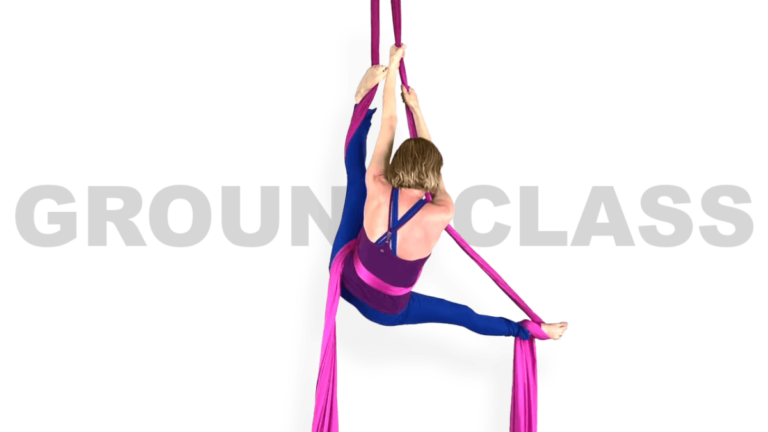
Unless you manage to injure your entire body, there are usually many body parts we can still train. If shoulder tendonitis has you stuck on the floor, then now’s the time to get the best front to back splits of your life.
A note from Jordan and Clayton:
We obviously want you to stay safe, and if your downtime is medical related, for sure follow your doctor’s advice. But also ask them a thousand questions about what you can do while recovering your health.
Jordan broke her foot ages ago. She needed a screw put into one of her foot bones. The doctor told her to stay off the foot for 8 weeks. That’s all he told her. It is fairly blanket advice. However, when we followed up with specific questions we got a lot more information. Questions like is it OK to do upper body training if I stay seated? Can I work on upper leg strengthening if I’m super safe about the foot? Can I go swimming? Can I work on pointing and flexing the foot? The answers we got to these questions kept the doors open to so many training opportunities while keeping her foot healing well and quickly.
I think you’ve got the idea by now. Find a way to stay in the game, even if it is as simple as working on a toe point while you are behind your desk or working on your acrobatic posture while running errands. Even these little things can lead to a toe point or body alignment that will be the envy of those around you when you return.
A clever aerialist can find moments to sneak in training. Check out a few of these ideas.
You can watch videos of how others move on the apparatus, trying to observe how some things work and others don’t. You can learn about anatomy or kinesiology
Remember earlier when we suggested thinking of your time off in terms of hours? Try to put as many hours of training in as you normally would, just put them towards things that you can manage and will have value when you return to the apparatus. There is a big difference between saying ‘I’ve done absolutely nothing for 1 month’ and ‘I’ve kept up the same hours of training, I just haven’t been on the apparatus in a month.’
If you are forced to take time off due to an injury, but then you don’t work on fixing what caused the injury you are very likely to end up back in the same place or often times worse.
So, ask your doctor or even better find a physical therapist with experience with aerialists and figure out what caused the problem. It is likely the fix will take some dedication and some reprogramming, but there is a good chance you can get started sooner than you can get back on the apparatus.
If it is work or just life getting in the way, can you learn to predict the down times? Or can you communicate your way to a better solution? Carving out the time and space we need for the things we love can be super scary. But if you do aerial, you’ve learned to manage scary situations. Sometimes much of this is out of our hands, but it doesn’t mean there are no ways forward. Find some one qualified to advise you, start with smaller easier things, practice, learn how to keep yourself safe, take a deep breath and do it.
The beginning is not a bad place. Most adults hate the beginning, but the beginning is where we make the most progress most quickly and we build the foundation for going forward. The beginning is where we make new friends and learn new lessons. The beginning is an awesome place.
By starting at the beginning we open up the opportunity to fix things we ignored or skipped and we increase the chances of coming back better. We don’t mean aerialists with years of experience need to enroll themselves in a 6 month Intro to Aerial course, but we do mean, take a moment to check in with the things you would learn in that course and go forward as quickly as possible until you hit a snag.
So after time away, make an intention to be aware of the whole experience. If your grip feels weak, then take the time to warm up your shoulders and arms more fully or stop there and build some grip strength. If your grip feels good, then move on to the next thing. If your inversions are sloppy or low, then work on that. Resist to rush through and do the cool thing after the inversion.
Starting at the beginning gives us the opportunity to correct quirks in our skills and get rid of unnecessary cheats that have become lazy habits over time. So many of us find ways to make a skill work for us, little shortcuts or assists. These little cheats may be necessary at first, but then we get stronger (often without realizing it) and the cheats aren’t necessary anymore, but they’ve become lazy habits.
Sometimes a cheat to overcome not being strong enough changes the intended pathway of a skill, then when we become strong enough to not need the cheat anymore, we don’t bother to go back and re-learn the correct pathway.
Starting at the beginning keeps us from inadvertently hurting ourselves. A skill that you used to do that starts in full splits and takes you to over splits can be the skill that tweaks your hamstring if you come back to it assuming nothing has changed about your flexibility. A skill that requires a moment of brute strength may take you the wrong direction if you don’t have the strength you used to have.
Here are a couple of skills that can force you further into you your flexibility if you aren’t careful.
Starting at the beginning can be a good time to incorporate new upgrades. If you have been good about training other body and brain while you have been away, these new strengths, mobilities and ideas become like new upgrades, but they can take time to incorporate into our muscle memory or they can completely change a skill. It would be a shame to spend your time away working on a fabulous toe point and then not take the time to add the toe point into all of your skills.
Be patient with the progress and curious about the results.
A lot of times life changes like new jobs or relocating force us to change training studios. This can be a big change. When training with a new coach or in a new facility taking a good number of steps back and starting from the beginning can help with starting things off on the right foot.
Vocabulary is notoriously different from school to school. Training cultures and expectations can be very different. Teaching styles and focuses can be widely different. Remember starting from the beginning doesn’t mean you need to go at the same pace, it just means you cover all of the steps. And often learn something new in the process to make you a better aerialist in the long run.
Taking time away is truly a challenge regardless if it is related to injuries, work or something else. We always try to focus on turning it into a good thing. This means approaching your downtime with thought and attention. A lot of times we can learn a lot about ourselves, our minds and our bodies, when we are forced to go through some time away from the apparatus.