Silks
|
|
Already a Member? Log in to continue.
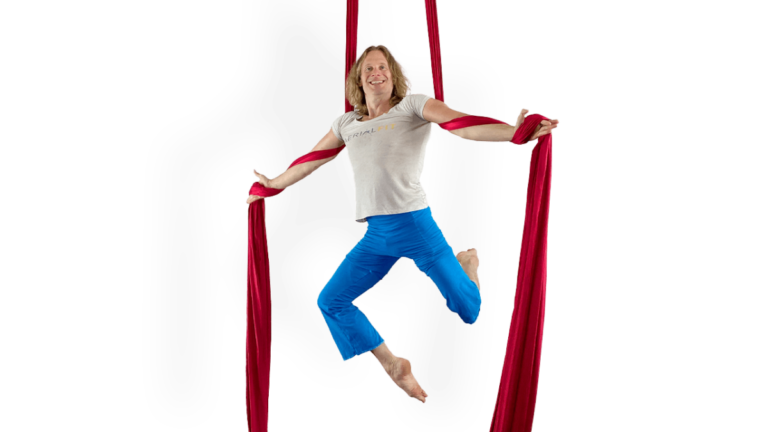
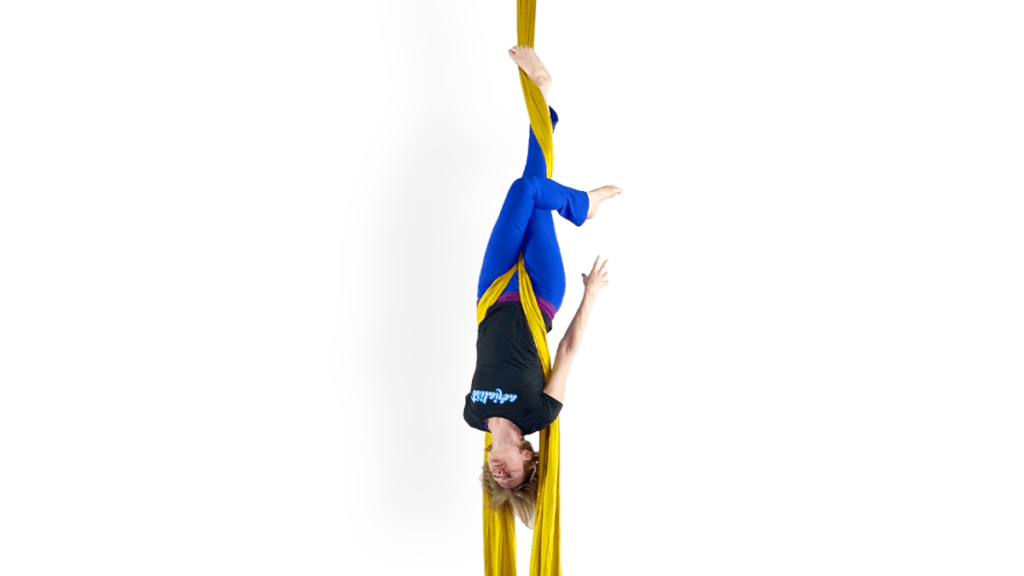
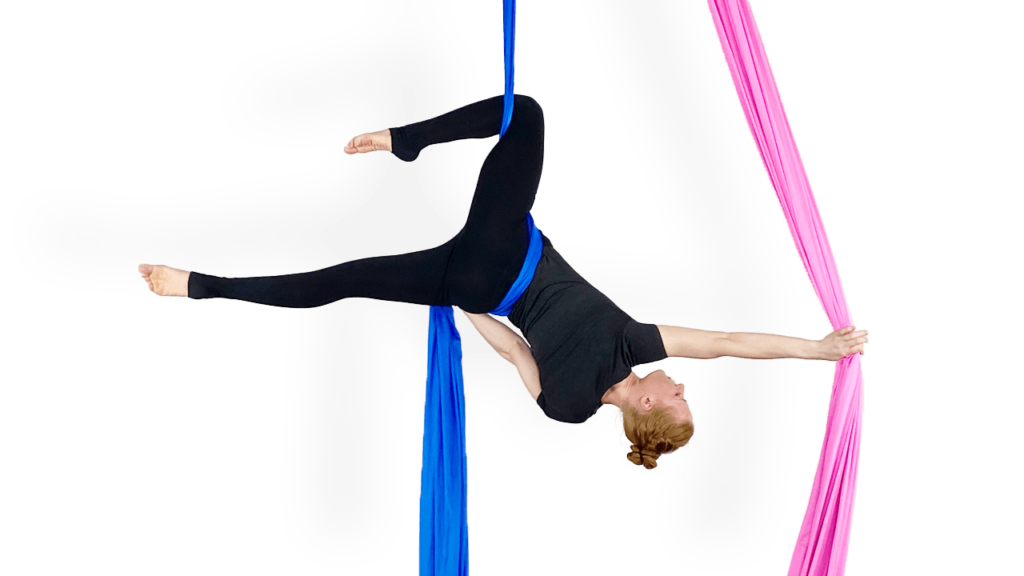
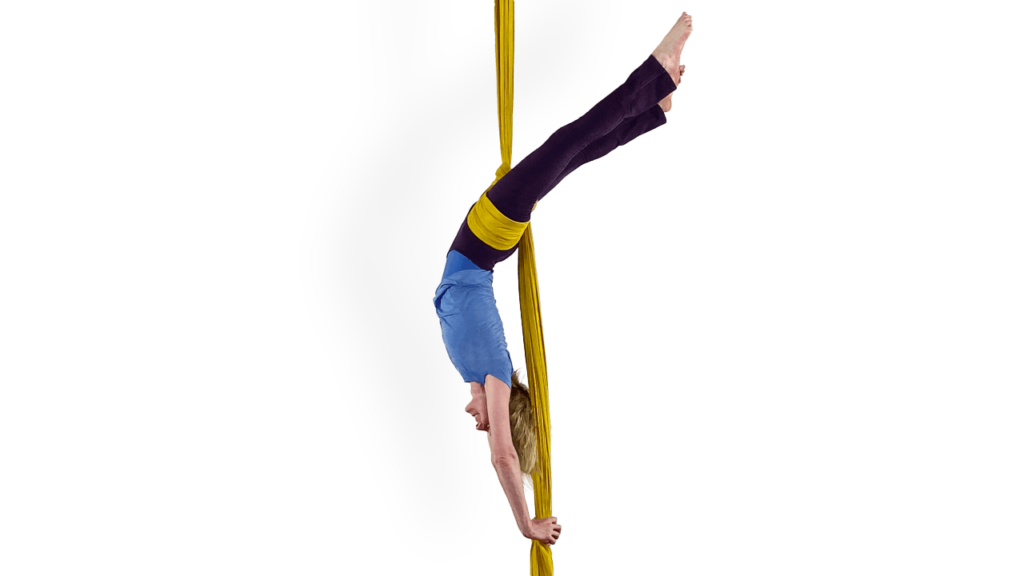
Iron T is a classic skill that requires great shoulder engagement to master. It can be risky on the shoulders and wrists if it’s practiced before an aerialist is strong enough to support it and also if the shoulder engagement or rotation is wrong. In fact, if the shoulder position is correct then it’s possible to open up the grip completely in this skill, and we’re demoing that too. We call that the Thumbs Up Iron T and it’s a key part of our teaching progression for this skill.
This video goes over our main teaching cues for a solid and safe Iron T, as well as progressions and pathways explored on the ground as well as in the air.
Become an Aerial Fit Online member to access the video for Iron T. This in-depth video will explain how to properly train this skill. It also includes cross references to the most important Building Blocks, Common Mistakes, Related Drills, Ground Drills, Variations, Next Steps and Sequences.
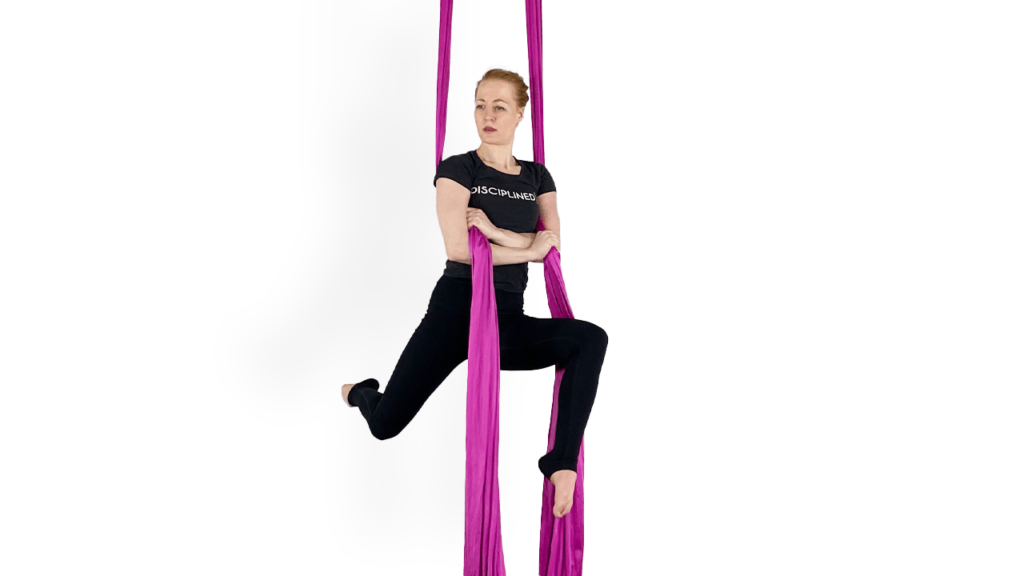
Already a Member? Log in to continue.
Some of the most important aerial silks skills, related movements, and prerequisites from our aerial video tutorial library that students should be very comfortable doing to succeed at Iron T.
These are the most common mistakes we see with students when they are learning how to do the aerial silks skill Iron T and detailed directions on how to fix these problems to make the skill look and feel easy.
These similar aerial silks skills and aerial drills are helpful to troubleshoot and help with problems. Students don't need to have mastered the Iron T to work on these related skills and drills. These drills may help your students make important connections and answer the question "What am I doing wrong?".
These are some of our favorite ground drills for aerialists for Iron T. They can be used as part of the ground warm up or as part of the aerial class teaching progression.
These are different variations of Iron T. Students should be very comfortable with the current skill before working on these different or more advanced variations. They can be used for further exploration, managing students with different levels and adding variety to aerial silks choreography.
These are the next steps we teach to our aerial silks students after they’re comfortable with Iron T. The next steps can be started right away and they lead toward specific future goals which are often the most advanced aerial silks skills.
These are some of the more advanced silks skills that build on the strength and control taught in Iron T. They are not the next immediate steps, but rather long term planning goals.
These are aerial silks sequences, transitions, and combinations that include the aerial skill Iron T. They are fun, creative, and challenging sequences from our aerial video tutorial library.