Prepare Your Students to Succeed in the Air

Teaching and Training Concepts |
Guest

When we teach our aerial classes, our goal is for our students to succeed in ways they might not have thought possible! Aerial is so empowering, and we love to experience the joy of learning with our students. Their learning comes from us (teachers) guiding them to wins and discoveries in class. Our learning comes from our students when we observe their bodies in action and then hop on the apparatus to figure out how to help them succeed more easily.

Last month we talked about setting our students up for success with a smart ground warm up. If you’d like a refresher, you can read that post right here. This article will dive into the first things we do in the air, and how we use the aerial warm-up to set our students up for success with whatever our class plan is for the day.

Start simple

We’re always striving to help our students maximize their potential in the air, to experience both easy wins and big wins, and that means working from their strengths and movement understanding. So we build up from what they already know and layer in new detail to expand their understanding.

We do this in two ways. We first connect them with their bodies and how they are feeling today, and then we connect them to their previous knowledge by honing in on the most relevant skills for the class.

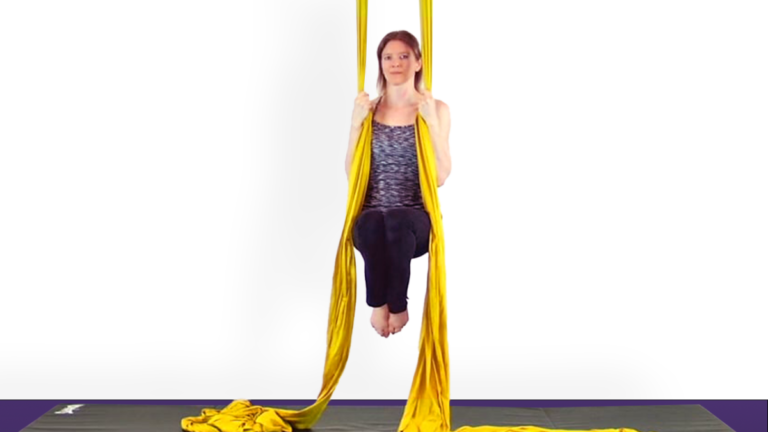
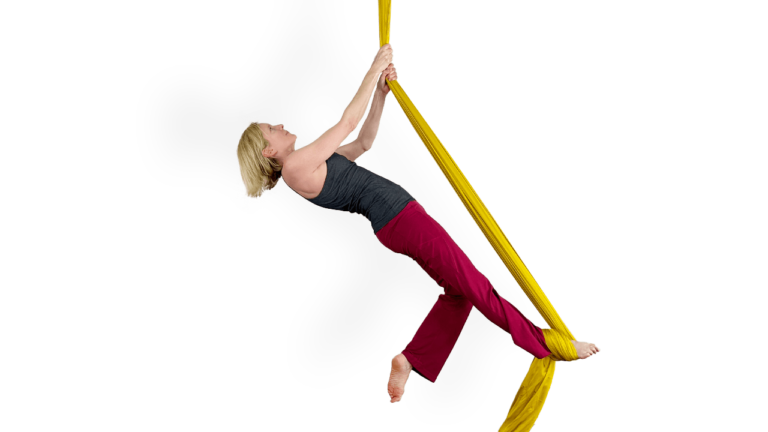
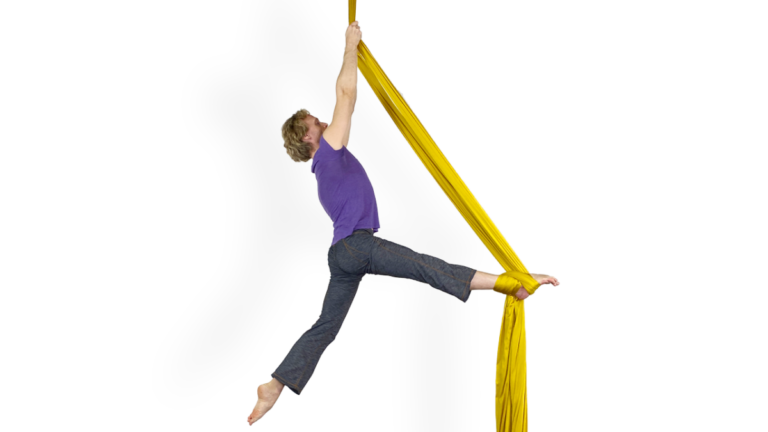
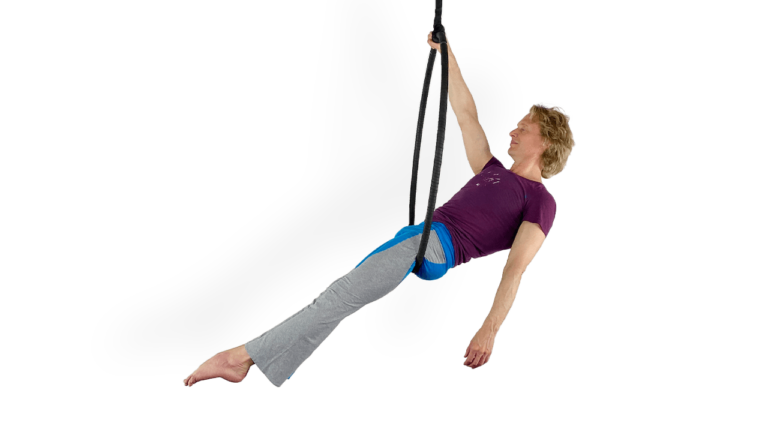
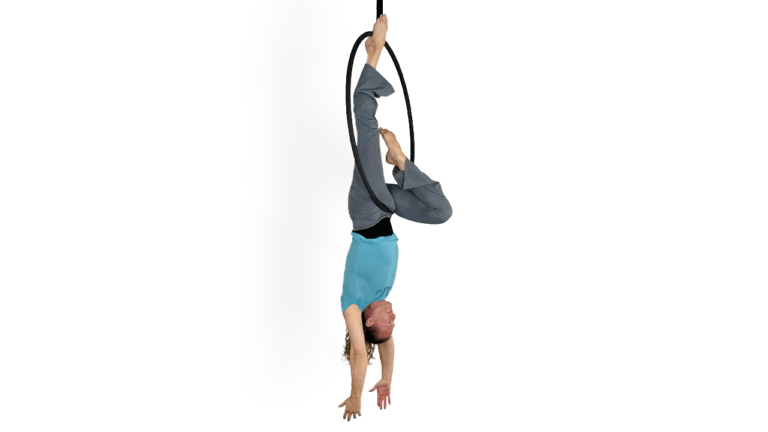
When we first touch an apparatus, we always start with simple warm-up drills that will get our students connected to their grip, their shoulders, their core, and their breath. We keep an eagle eye on what they are doing here, to make sure they are moving well and improving. Here are a few examples of some of our beginning of class warm-up drills.

Silks Class
Level 1 |
Conditioning
Level 1 |
Conditioning
Level 1 |
Climbs
Hoop Class
Level 1 |
Conditioning
Level 1 |
Conditioning
Level 1 |
Leg Calibration

Then hone in on specifics

Once we’ve covered those, then the rest of the warm-up is typically connected thematically to our class plan. Let’s look at a some examples on Silks and Hoop.

Silks Class

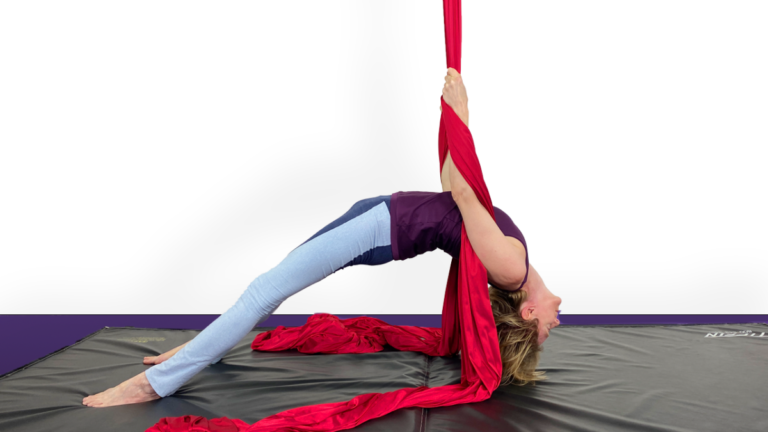
Let’s say that our class plan is to work on the Inverted Layback. This skill involves a hefty dose of back body engagement as well as balance and spatial awareness.

Level 2 |
Footlocks
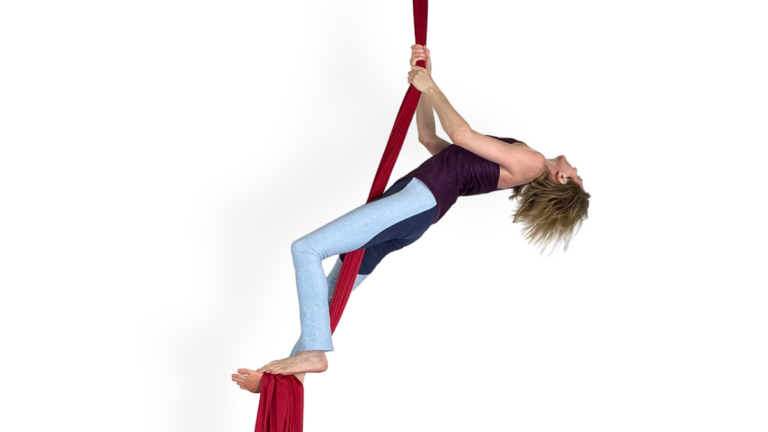
Inverted Layback

This skill is in today’s class plan, and it involves a hefty dose of back body engagement and balance/spatial orientation. So we’d probably include drills like the following in our aerial warm-up:

Level 1 |
Conditioning
Retractions – to feel the back body engagement that makes the skill light

There are different ways to cue this drill that we cover in our tutorial, and for today’s class plan we would focus equally on the upper body and lower body engagement to lift into the strong back arch.

Level 1 |
Conditioning
Back Body Engagement Drill – for leg control

This is one of those drills that looks so simple but can be groundbreaking for many students when it’s practiced with attention to detail. We would segue it right into the next drill and use the same concepts….

Level 1 |
Footlocks
Back Arabesque – for controlled range of motion

Today’s focus is all about sinking the hips into the skill and using the standing leg to press up out of the skill. Both of these concepts will apply to the Inverted Layback in today’s class plan.

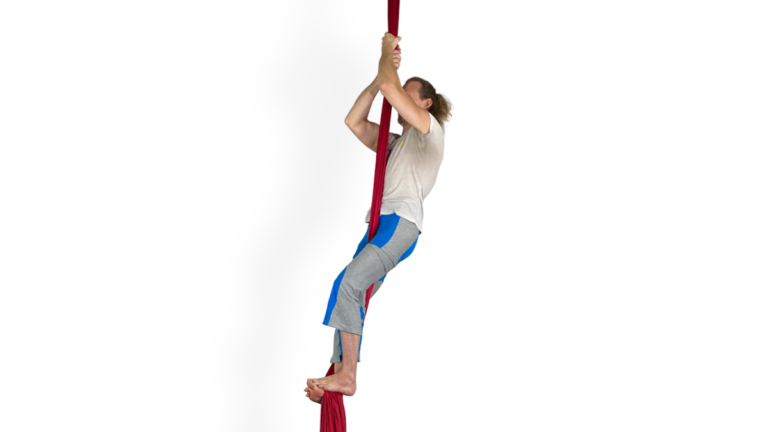
Basic Climb Variation

And, circling back to the skills above that we include in every warm-up, instead of the regular Basic Climb, our warmup climb would be this Roll Up Version of Basic Climb because it warms up the back body engagement so nicely and shares so much in common with the Inverted Layback that’s in our class plan.

Hoop Class

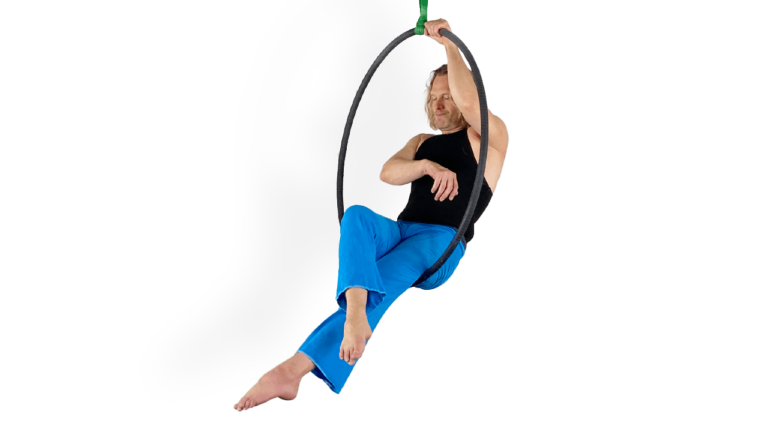
Let’s say that our class plan is to work on Gazelle. This skill involves a good bit of splits strength and mobility, the ability to move with a tight body, as well as a bit of fear management.

Level 1 |
On Bar
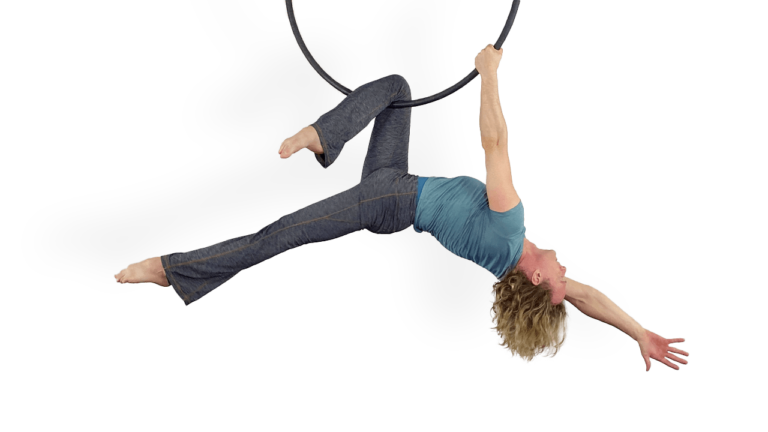
Gazelle on Aerial Hoop

This is the skill we are planning for our example class. Gazelle looks harder than it is. For some students it may be a quick one day project and for other students it might need practice over months to get comfortable with it.  We want to set up everyone to succeed, so we might include aerial warm up skills like these:

Level 1 |
Under Bar
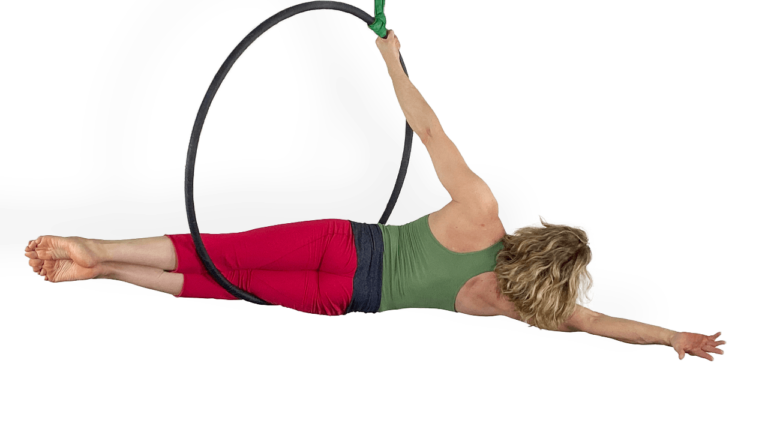
Angel – for the similar shape

The basic Angel shape is very similar to Gazelle, but the supports are much easier to manage. Angel is a good place to get students to warm up the hip extension and backbend that is a major part of Gazelle. We could also imagine challenging our students to see if they can modify the angel to get their supporting knee closer to their hands to further recreate the Gazelle shape.

Level 1 |
Conditioning
Hollow Body Rocks – for tight body work

Moving with a tight body can be a hard thing to “wake up” in students, Getting them to work on this simple drill will go a long way towards helping them adjust their body position in a Gazelle. If hollow body rocks is super easy for students, they can be further challenged by moving their hands lower down the hoop. This will make keeping the tight body much harder. We have even used skills like a super slow Half Mill Circle (the single knee forward roll), with a focus on keeping the body fixed in one solid shape to help prep students for tight body movement.

Level 1 |
On Bar
Inside Mermaid – for the similar initiation

The set up for Gazelle is a super important part of making the skill easier and feel less scary. A poor set up can make the skill really unpleasant, so getting students to do a skill with a similar initiation can help leave mental space for everything else that has to happen in a Gazelle. Another great option for this is the Coffin and Faint Combo, but since this skill is a little more advanced it may not be the best option for everyone.

Level 1 |
On Bar
Rocket – for similar sensation and exit pathway

Since Gazelle can trigger a lot of sensation and fear in students, we often prep them with Rocket. Rocket can be done very easily from a Hip Hang. Rocket is a favorite exit pathway from Gazelle and students who know that the exit is all prepped and ready to go will usually feel much more comfortable in the skill. Rocket also has similar leg sensations to a Gazelle, which can also help alleviate any fear or hesitation from doing Gazelle.

These “easy” warm ups don’t have to be boring

With a bit of planning time and creativity these aerial warm up skills can be modified to fit the class seamlessly. One way to do this is to rearrange them into a quick and easy teaching sequence. This doesn’t have to be performance worthy choreography, but making them into a sequence makes them a lot more fun. Or the skills can be taught in isolation, but with a new focus. Bringing a new focus to a familiar skill is a great way to hand students an easy win early in class, and to get them curious about going deeper into everything aerial.


Related Skills

Each and every skill we teach in the air has a multitude of interrelated skills that can be used as warm-up, as conditioning, as troubleshooting, and as complementary skills. Aerial is so versatile, it’s what we love because it is truly accessible to anybody who takes the time and attention to explore the options.

Every skill in our library includes a Related Drills section, and we encourage our members to explore those related drills in their aerial warm-ups and also as specific trouble-shooting or conditioning drills when dealing with tricky skills. Members who are logged in will see all of the cross-references. Next month we’ll be taking this concept further and looking at how we check in with the building blocks or prerequisites of a skill to make sure that our students are ready to succeed.

Not yet a member? Join us today!

Got questions about what we had to say here or about our content? Send us a message or set up a quick Zoom chat. We love having conversations with other aerialists.

Leave a Reply

Your email address will not be published. Required fields are marked *