
Teaching aerial for so many years has given us the really cool vantage point to be able to watch our students face scary situations. Going upside down for the first time. Letting go into a drop for the first time. Climbing up high for the first time. We love to see our student doing something they thought was impossible in the air and come out ecstatic on the other side. We’ve included a Managaing Fear Mental Checklist at the end of this blog post. This is how we help manage our own fear on the apparatus.
Scientists know that facing your fears is good for the nervous system because facing things you are afraid of can rewire your brain (Psychology Today, The Atlantic, Washington Post). In aerial we see this all the time! But we recently experienced it in a completely new way, that was at the same time very familiar from our years of aerial training and teaching.
Clayton and I recently traveled to northern Europe for a winter vacation. I know, we’re strange like that. One thing we were really interested in was their tradition of winter swimming. In case you’re not familiar, this is where people actually cut holes in the ice and go into the water wearing nothing but a bathing suit and sometimes a wool cap on their head.
Keep in mind we live in South Carolina where it rarely gets below 50°F (10° C) in the winter and we almost never see snow or ice here. And we are accustomed to swimming in water that is usually in the mid-80s F (high-20s C) during the summer.
So here we are enjoying our first plunge into the freezing Baltic Sea, in December. Are we crazy? Maybe. Were we scared? Definitely. But here’s the behind the scenes prep that made it possible.
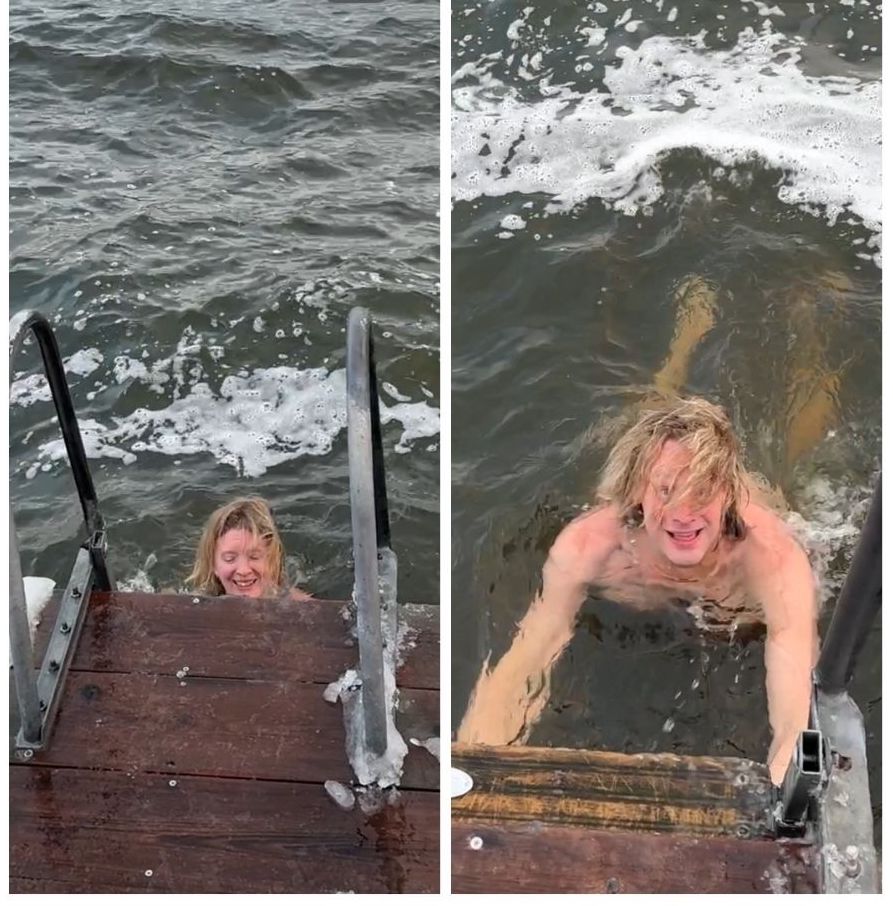
About a year and a half ago I (Jordan) came across a photo of someone swimming in an iced-over lake, in nothing but a bathing suit. My first thought was this person must be super-human, but when I researched it I discovered there are whole communities of people who do this. I was fascinated enough to be curious about what that would be like. But being a logical person I needed a system. There was no way I could just get into icy water without any prep!
So I looked at my goal: submerge in icy water. I looked at my starting point: I really hate being cold and I’m used to swimming in an 80+ F (27+ C) degree ocean. And, I looked at the vast distance between where I was starting and where I wanted to be. There’s always a way to bridge that distance, so here’s what I did.
First, I asked Clayton to join me. Because I knew this process would be much easier with a supportive partner! Then, as summer ended and the water cooled slowly, Clayton and I just continued to go to the beach and get in the water, every weekend through August, September, October, November, the cold snap of December, and then into the new year as well. The water temperature slowly dropped into the 70s F (20s C), nice and refreshing, then the 60s F (high-teens C), that took some getting used to, then the 50s (low double digits C) which was really cold to us. We did not stay in long! As the temperature dropped our bodies and our minds adapted and we began to gain confidence in our ability to withstand cold water. We enjoyed the challenge and we learned how to add preparation into our daily routine by finishing showers with cold water, and how to recover afterwards by quickly changing into warm, dry clothes and having a hot drink nearby.
We continued with this routine for about a year. (Of course during summer we had to take a break because the ocean where we live is too warm, so a cold blast in the shower became our summer routine.) But as soon as fall came around we continued going to the beach and getting in the cooling water.
So when we arrived in Helsinki, in December, where there was snow and ice on the ground and the air temperature was well below freezing, we felt that we were as ready as we could be for two people who live in the southern US! But getting into that icy water was still scary and difficult. Here’s what helped us:
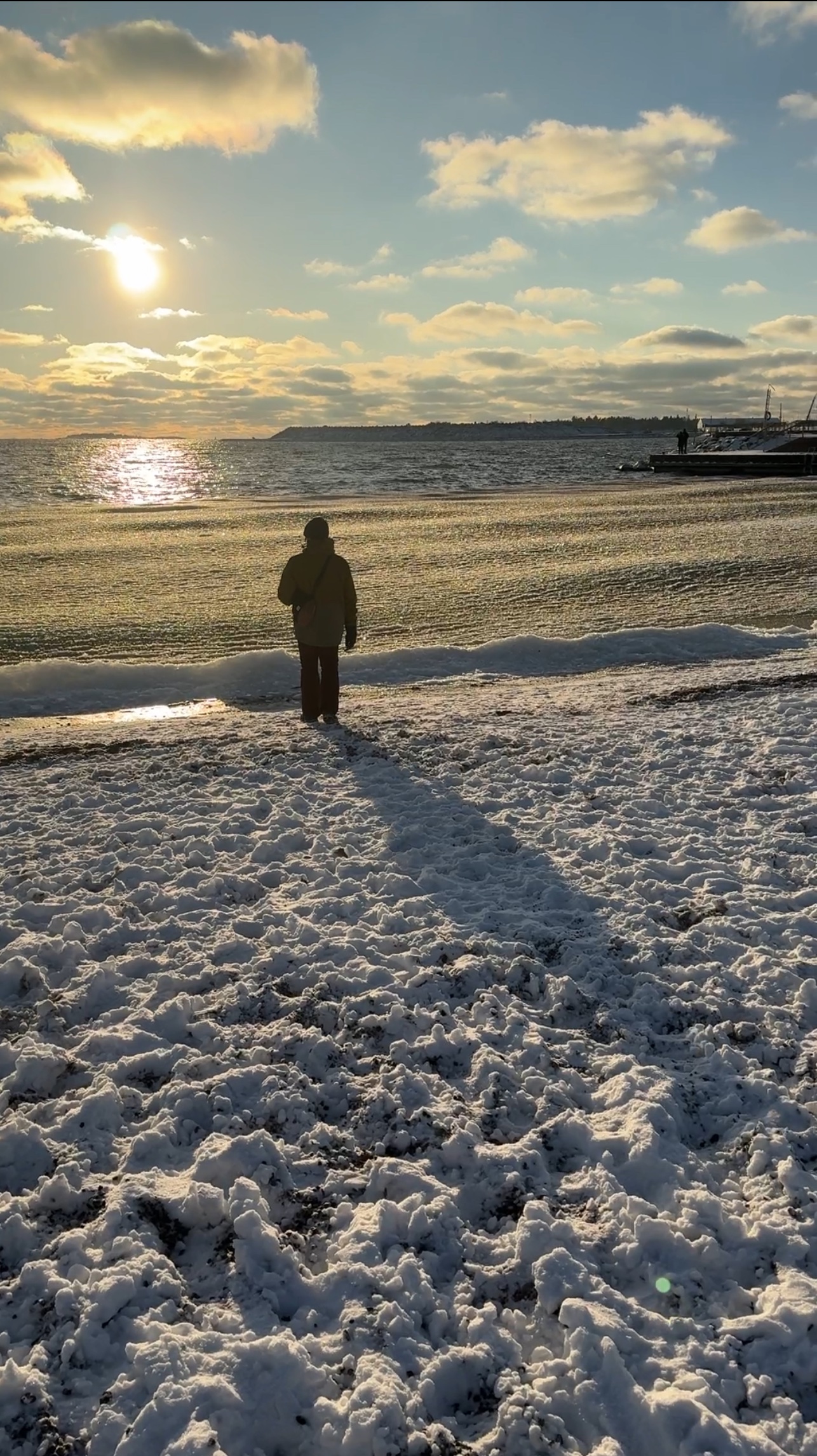
Going in was thrilling and when we came out we were no longer cold. If you’ve done cold plunges then you know what we mean. That inner warmth that your body creates is amazing and sustains you for long after.
And why are we writing about this on our aerial website? Because this whole process is so familiar… it is exactly the way that we approach scary things in our aerial training and how we train our students to approach them too.
So the next time you’re faced with something scary and difficult, remember it’s all a process. Start slowly and work through the progressions, allow your nervous system and your body time to adapt, and one day you might find yourself doing something you once thought was impossible! If you’ve worked up to it and have the support system in place, then chances are good you can face it and thrive. And come out revitalized on the other side!
We created a checklist for managing fear. These are the mental checklists we go through when we are encountering fear in our own aerial practice and even in our day to day lives.
This document is available to our Free and Paid Members. Join now or log-in to view and download this document.