We are always thinking about our students’ short term and long term success. In the short term we want them to enjoy class, build strength, and learn fun new skills. In the long term we want them to stay injury free including avoiding repetitive use injuries, level up without having to navigate major plateau hurdles, and accomplish goals they previously considered beyond them.
These same ideas apply to ourselves in our own training and to any aerialists who are training independently (but never alone). We need to keep an eye on our own short term and long term success.
While this of course requires a lot of on-apparatus training and apparatus smarts, we believe short term and long term success starts on the floor.
When we teach, the ground warm-up is our first opportunity to observe our students in motion, convey information about the class plan, and get our students connected to their bodies. So we use the ground warm-up not only to prep our students for the on-apparatus work to come, but also to prep ourselves to identify any challenges that might come up well in advance so we can head them off.
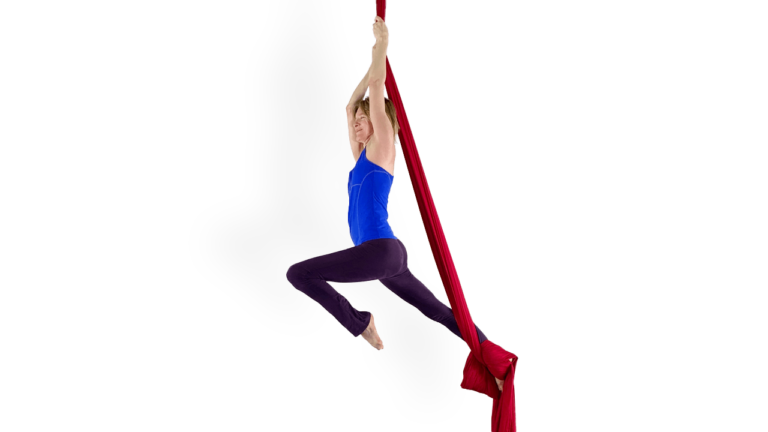
Let’s say our class plan is to work on a Russian Step Through Turnaround Climb. One of the key actions in this skill is an overhead reach with external shoulder rotation. That’s what sets the Ole Grip in place and allows the body to turn underneath it. We know that overhead shoulder mobility is something that is challenging for many bodies, so in the ground warm-up we’ll dive right into that.
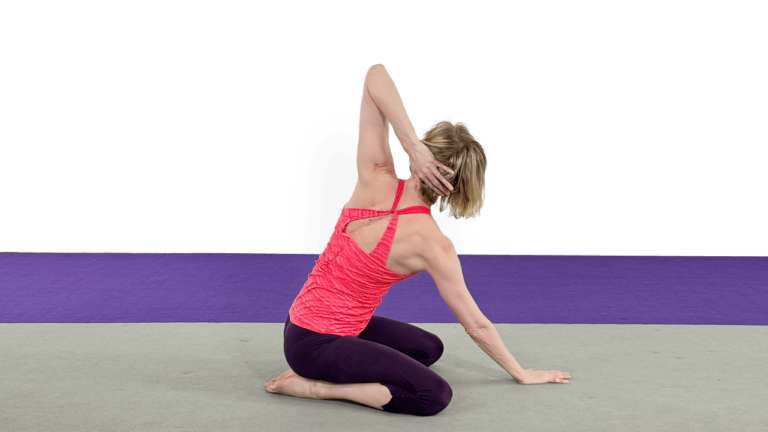
Here’s an example of a ground drill we use to simply warm up for overhead shoulder mobility. This drill gets the upper back moving and when the upper back moves freely then the entire shoulder complex is able to function optimally. This drill is simple and quick and can be built on with different variations that we cover in our tutorial.
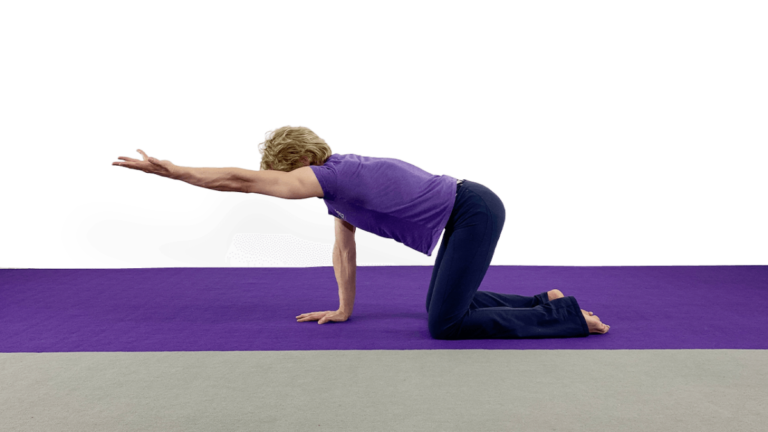
Here’s an example of a ground drill we use to specifically activate the right muscles and learn basic pathways. Many times students don’t even realize their overhead shoulder mobility is limited until they try a drill like this. This drill sets them up for healthy overhead shoulder mobility since it focuses on the rotation and reach that are needed to allow the arm to move while keeping the shoulder joint stable at the same time.
We would use the same ground work for the Ole Grip Turnaround skill on Aerial Hoop.
We cue our students to move mindfully through these drills. Then when the on-apparatus work comes later, we can refer back to the actions they were using on the ground. This makes learning easier and quicker because they already know exactly what to do!
Each and every skill we teach has the potential to have dozens if not hundreds of useful ground drills, and sometimes when we’re troubleshooting these drills can be very specific to a particular student or body. Learning to research aerial skills on the ground is a great way to get better in tune with how our body moves in the air. Because how we move in the air actually starts from how we move on the ground.
This is a bit of a tangent, but since we are talking about how students’ success starts on the floor…
We also train our teachers that their class work starts even before students step onto the training floor. The student may not realize it, but class starts the moment a student steps through the door. As studio owners, we create and maintain a culture of welcoming students warmly and making sure they (and all of the staff) leave outside drama at the door. If a student needs to vent or rant about their day we offer to chat with them outside, away from other students.
We also expect our teachers to observe their students as they come through the door and already be making modifications, additions and deletions to their class plan based on what they see. Do students come in with their usual energy or demeanor? Are they massaging any body parts or putting on band aids?
Again, these ideas should be applied to our own training sessions if we are training independently. While we may have woken up with grand training plans, our short term and long term success will benefit from updating our plans as the day progresses and protecting our own training time by creating and maintaining our own boundaries.

Every skill in our library includes a Ground Drills section, and we encourage our members to explore those ground drills in their warm-ups and also as specific trouble-shooting or conditioning drills when dealing with tricky skills. Members who are logged in will see all of the cross-references. Next month we’ll be taking this concept into the air and talking about how we incorporate a targeted aerial warm-up in our class plan to prepare our students for the main skills we’ll be teaching that day.
Not yet a member? Join us today!
Got questions about what we had to say here or about our content. Send us a message or set up a quick Zoom chat. We love having conversations with other aerialists.