

A simple truth about aerial (and probably life) that is easy to lose track of is the fact that complex problems don’t require complex solutions. It’s amazing how humans first measured the circumference of the earth 2,200 years ago simply with shadows, the walking speed of camels, and simple geometry. And they were only off modern technologically complex measurements by 4%!
Yes, aerial is hard, but if we observe where students struggle and then observe how they eventually succeed, we can use that information to make it easier for the next students. In this way, the learning of skills for future students gets easier and easier. All this simple solution requires is observing your students, evaluating their progress, and modifying how you teach the skill in the future. It isn’t a profound process, but the impacts on our teaching can be profound.
Knowing what troubles and challenges students are likely to encounter, and then expertly preparing our students to navigate through or completely avoid those rough waters, brings us immense joy and satisfaction! Oh, and the students love it too.
Everyone and every body is different and we always try to teach to the individual. At the same time some mistakes do seem like they are universal. It might be because for the most part humans all move in a similar way. We all walk, stand, sit and overuse our gadgets more or less the same way as everyone else and we bring these similar common pathways into aerial class.
Aerial moves are not always intuitive, and understanding how a move could be misinterpreted and knowing why this mistake is detrimental to success means you’re better prepared to troubleshoot for your students.
Teachers aren’t great because they can do a skill better than anyone else, they are great because they understand all of the ways skills can go wrong.
We’ve been teaching for so long, and developing our eye over so many classes and lessons, that we’ve seen and corrected so many mistakes on so many different bodies. We are constantly updating and adjusting our curriculum and the way we introduce skills to prevent these common mistakes from happening in the first place.
Mill Circle is one of the most classic momentum skills and it is very exciting. You can literally hear the wind in your ears as you rotate around the hoop. We have had some students get it on their first try. It is a common skill in gymnastics and we have also had figure skaters get it without any effort. But for most adults, Mill Circles are a big project. One of the hardest things about momentum skills is that so much happens nearly all at once.
So when we are teaching, we follow a process. After we make sure students are comfortable with the Building Blocks of the skill, we then consider the Common Mistakes. We compare what we know about how the skill can frustrate students against the actual students we have in class, and we decide which if any of these problems are likely to pop up. We then use that information to modify our warm ups before class, or add in a little floorials to help prepare students, or highlight different aspects of the skill in our demonstrations.
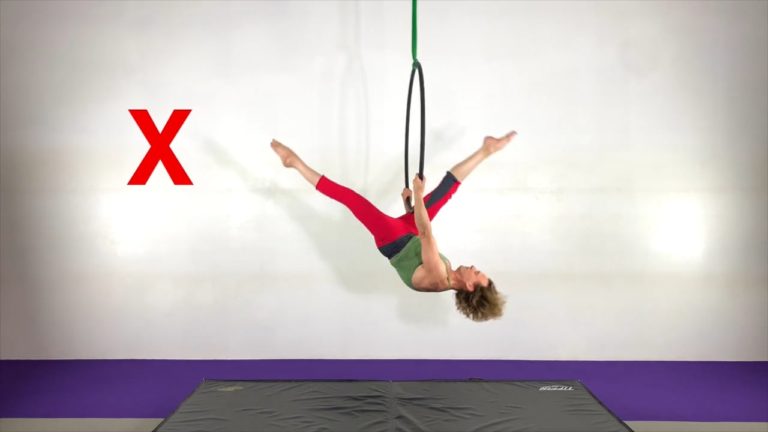
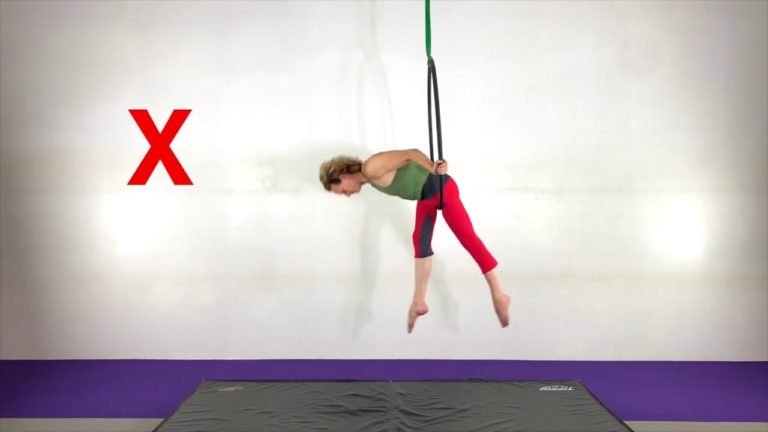
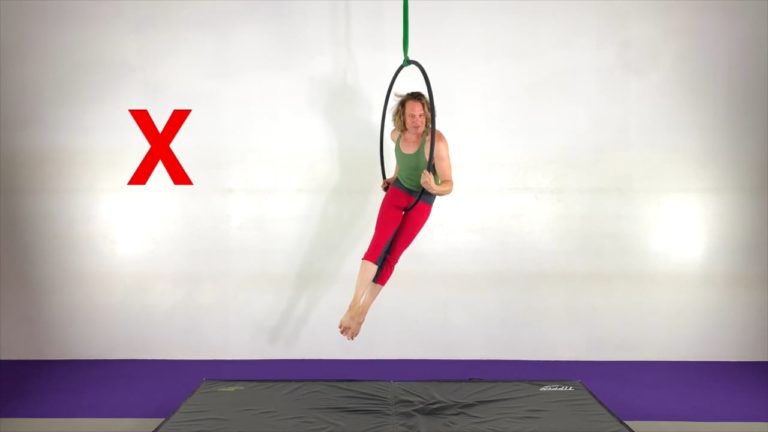
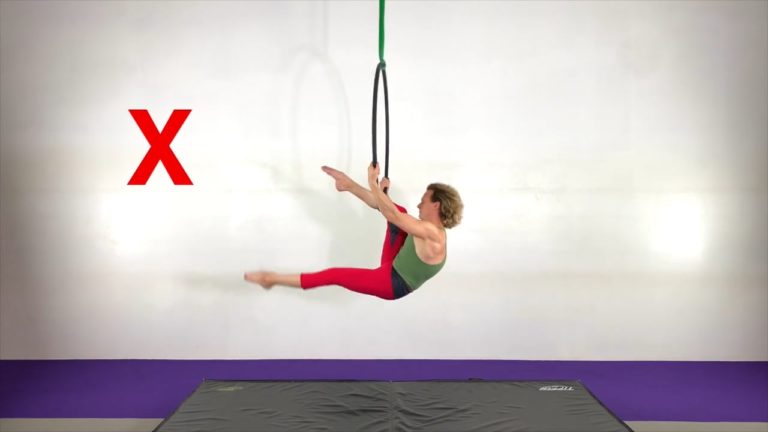
Here are the most common mistakes for Mill Circle. Do they look familiar to you? These aren’t all of the mistakes that students can make, and we are always updating our lists and curriculum, but they are the ones we currently see the most often.
Aerial Fit Online Paid Members see all of the common mistakes and how to fix them when they’re logged into any skill’s page.
If you teach Mill Circle often, you probably have seen other common mistakes too. Tell us about them in the comments below! Or, you may see mistakes listed on our website that you have never encountered. Both of these possibilities are fine and normal. These differences can come out of each schools curriculum. For example, we always teach our students to move as slowly and methodically as possible when learning new skills. We especially encourage them to feel their way through skills, but Mill Circles are momentum skills and there needs to be a certain amount of intelligent letting go of control to make momentum skills work. So, because of this in our curriculum and culture, it is really common for our students to struggle with initiating Mill Circles with enough “oomph” and giving over control to physics. So we have to focus on preparing our students for that from the get-go.
Sometimes differences unrelated to aerial can have a huge impact on curriculum. Imagine an aerial school that shares a space or is neighbors with a martial arts school and has a lot of martial artists in classes. I bet their students won’t have any trouble with heel driving (aka lever leg) in a Mill Circle.
Common Mistakes can be solved on the spot or they can be solved in advance, meaning we expertly prepare our students to avoid the problem in the first place.
Sometimes simply reminding students to “Try Harder.” or “Keep your chin tucked.” is all that is needed to fix a problem. Or if we are familiar with the mistake, then we will have an insightful tip at the ready. It could be something like “Your leg is internally rotating, it needs to stay neutral.” Having these cues accessible and in the front of your mind can save students a lot of frustration. And it is inspiring and empowering to be part of that exchange.
But then if the simplest of quick cue solutions don’t work, we rely on related drills. We will be talking about Related Drills next month, but here is a quick peek into the concept. One of the common mistakes for students in Mill Circles is let the hips drop and then the hoop slides into the back of the knee. So as a related drill we have students train inverted splits under the bottom bar. Then we have them do a half mill circle into an inverted split.
We always try to prepare our students so well for a skill that they never realize how difficult the skill is nor do they realize how students who came before them may have spent months struggling with the skill. This takes planning ahead and patience, but it is far from boring. We work in Building Blocks, Ground Drills (we’ll be talking about these too), and Related Drills way in advance of training the target skill. Or, if we are ready to move onto a new topic, we don’t choose the next project out of the blue. We resist the temptation to pick something just because it is cool or trendy. We consider the skills we have already worked on and plan the next skill based on the work and preparation our students have already done.
By the way, this doesn’t mean we don’t teach cool and trendy skills…of course we do! But it does mean that we research new skills (both on our own bodies and with our colleagues and most advanced students) to learn as much about them as possible before introducing them to our students.
Common Mistakes is only the next step in how we approach teaching skills. In the next article we’ll continue this series by diving into our method for finding and using related skills and drills.
Aerial Fit Online Members see all of these connections when they’re logged into any skill’s page.
Check out all of the articles we have on making aerial more fun and faster to learn. All of these concepts are a part of how we approach aerial and how we present our tutorials.
All of the tutorials in our Aerial Fit Online resource include these cross-references. Our website isn’t just a list of skills, rather it is set up exactly like our teachers’ brain. Everything is interconnected in a vast web of options and paths to help guide aerialists toward easier success with their goals.
Make your life simpler, Join Now!
All of our memberships, start with a low cost one week trial period that gives you full access to the membership. You can cancel anytime. Still not sure? We also offer a no credit card required Free Membership.