Everyone loves sequences! They are a chance for students to really hone their understanding and build their mastery of a skill. They can include surprising transitions and help students build new connections themselves. We use two types of sequences with our students, “teaching sequences” and “performing sequences”.
Performing choreography is what most people think of when they think about sequences, but that’s only one way to use them. We’ll talk all about “Performing Sequences” in our next blog post! Today we’re talking about “Teaching Sequences”. It is definitely possible for a sequence to have both qualities, but the big difference is “Teaching Sequences” aren’t developed to be entertaining for an audience. Their primary goal is to help students master their skills or make important connections.
As teachers we create “Teaching Sequences” for all sorts of reasons. We often develop teaching sequences when we want our students to spend more time training and mastering a skill, or if we think they haven’t fully grasped why a specific cue is so important to the skill. We also use “Teaching Sequences” to encourage versatility.
Sometimes learning a skill in isolation means students can always start in the perfect position with a clear mind and rested muscles, but then, when it comes time to connect the skill to another skill, the starting position might not always be perfect, the mind might not always be clear, and the muscles might not be fresh. So teaching a sequence can help a student master a skill!
Another great reason to use teaching sequences is because students love sequences, and anything that gets them training more is a good thing!
In our big picture teacher brains, each sequence our students learn is taught to further their understanding of aerial and all of the skills and concepts they’ve learned in isolation. To help students master a skill in many contexts, we string together “teaching sequences” without worrying about the visual appeal or entertainment value to an audience.
We always make sure our students have a good understanding of the skills in the sequence before we teach them the sequence. We don’t want to overwhelm our students with information, and often the “teaching sequences” are about mastery. We never expect our students to start with the expectation of mastering the skill right away. We also believe mastery includes making the skill work the best for one’s own body type, movement style, or educated preference. To accomplish this we encourage our students to make adjustments and modifications within sequences! But this is often too much to ask if a student is still learning the basic concepts of a skill, so the teaching sequence comes after the basics of the skill have been learned in isolation first.
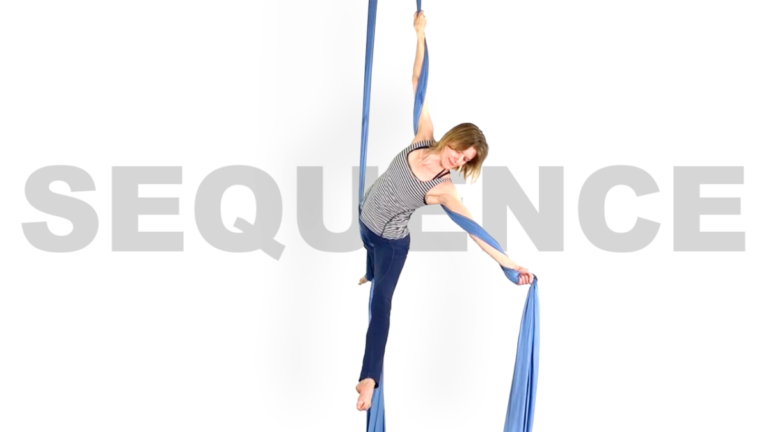
Here’s an example of a teaching sequence we created to solve the problem of students removing their footlocks carelessly and sloppily. In our minds there’s nothing worse than watching an aerialist perform a beautiful series of movements, only to have them break the illusion by kicking their footlocks free at the end.
So we developed a simple sequence that forces students to pause and take their time as they remove the footlock, because that moment is a key part of the sequence!
This sort of sequence is a win-win. Students love sequences, and we love students to take equal care with all of their transitions!
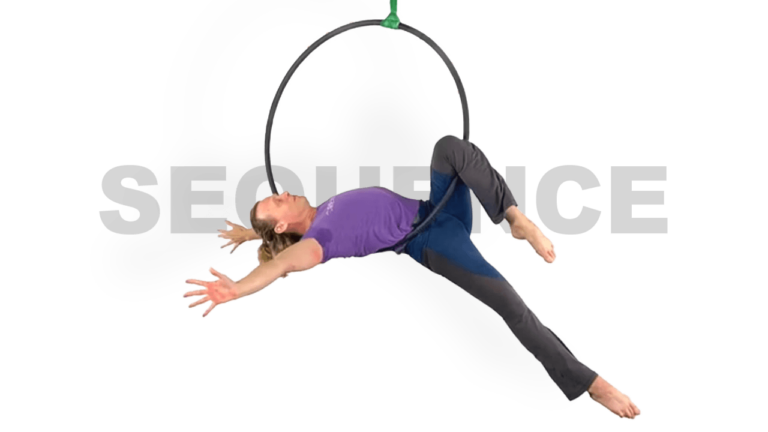
The Lion Infinite Sequence includes many different transitions into and out of Front and Back Lion. We actually don’t care if students do the sequence in the exact order we demo it, we just want to make sure they can do all of the transitions. So many skills on Aerial Hoop lead to some form or variation of a Lion, and if a student has mastered the transitions into and out of Lions they become much more versatile movers. The Lion Infinite Sequence is intentionally confusing because we want students to keep all of the transitions organized and separate in the heads so they are better and faster at incorporating them into their movements.
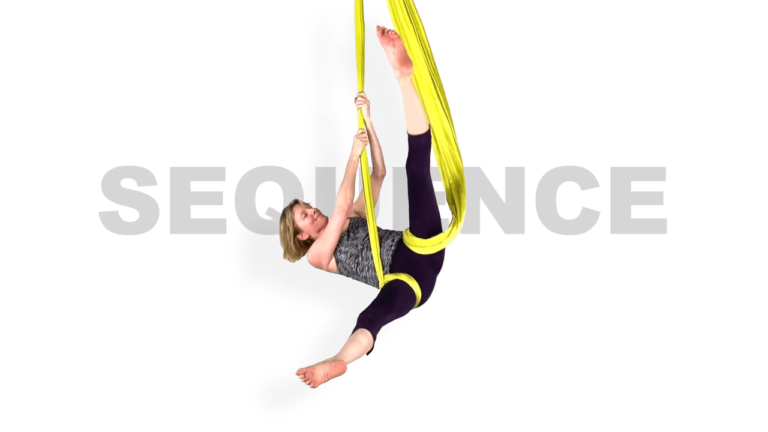
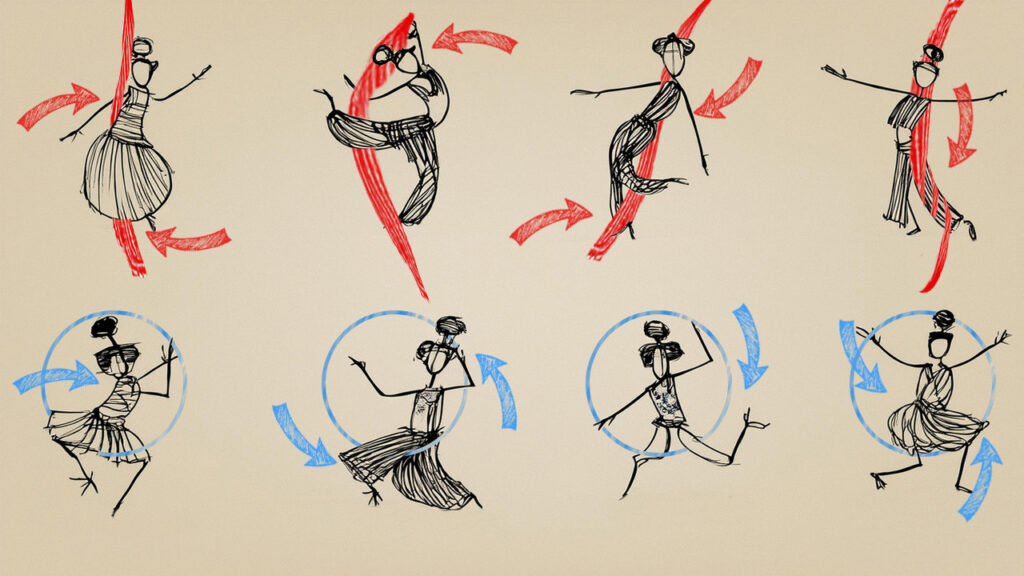
Here’s an example of a teaching sequence we created that helps students see the connection between various skills that either originate, move through, or end in a Catchers Wrap. This sequence helps students understand that very different movements can come from the same exact support on Sling.
After teaching sequences like this, we always lead our students through explorations of their own. Because although we could come up with countless sequences for our students, our favorite thing is when they understand the concepts so well that they can learn to create their own!
When presenting teaching sequences, we have some techniques that we swear by.
If a student has learned all of the skills first, and a sequence has 5 skills in it, then they will only have to remember 5 steps. But if a student is learning the skill at the same time, then the skill itself is a sequence of steps and all of the sudden students have to remember and keep track of dozens if not hundreds of steps. This can stifle the broader understanding that we’re teaching when we teach sequences.
“Teaching Sequences” are often challenging because they push students out of their comfort zone. They may require more physical or mental endurance. They may require tricky nuances. They may require students to start or stop in a less perfect position. While we love the creativity in aerial, the primary goal of these sequences isn’t creativity, but mastery.
Because we want students to use sequences to work on mastery, we think it is better to have them work on small chunks of the sequence at a time. We do this by having student repeat these small chunks frequently, and slowly add the different smaller chunks together into larger chunks that eventually make a complete sequence.
We believe mastery includes a student’s unique personalization and style, so long as it doesn’t compromise the skills supports or alter the skill to avoid personal challenge or growth. While we don’t want students to find clever modifications to avoid the challenge entirely, we do want them to make the skills their own and that means learning to move through the supports in the best way for their particular body.
We love to ask questions as our students are learning sequences! “Do you see the connection here?” “Can you see why that step is so important?” “Why does this work?” “Why didn’t that work?”
Anything that sparks thought and connections is great.
We’ve just scratched the surface of sequences, and in our next blog post we’ll dive into “Performing Sequences”! When we coach our students to perform they suddenly feel like they’ve entered a whole new realm, because once a strong foundation is there then we can safely start “breaking” some of the rules and bringing personality into the movement style. Check back next month to learn more about our coaching tips for performing aerial.
Aerial Fit Online Members see all of these connections when they’re logged into any skill’s page.
Check out all of the articles we have on making aerial more fun and faster to learn. All of these concepts are a part of how we approach aerial and how we present our tutorials.
All of the tutorials in our Aerial Fit Online resource include these cross-references. Our website isn’t just a list of skills, rather it is set up exactly like our teachers’ brain. Everything is interconnected in a vast web of options and paths to help guide aerialists toward easier success with their goals.
Make your life simpler, Join Now!
All of our memberships, start with a low cost one week trial period that gives you full access to the membership. You can cancel anytime. Still not sure? We also offer a no credit card required Free Membership.