Add a Little Spice: Variations for Aerial

Teaching Concepts |
Guest

This is a series we are doing on simplifying the complexity of Aerial.

In the last article we talked about Ground Drills, and using them to make learning the skills on the apparatus easier and faster by preparing and workshopping actions on the ground. Floorials for the win!

Variations are an interesting tangle in the concept of simplifying the complexity of aerial. Most people who have been doing aerial for a long time often feel as if they have forgotten more skills than they remember. So how can keeping track of all of these variations make things more simple?

The answer is that thinking of one skill as having different variations, instead of thinking about each variation as its own skill, makes things much easier to remember (and to understand). When you really understand how and why skills work, then you tend to think of them in groups that share commonalities, rather than lots of individual skills that all require memorization.

Knowing a good number of different variations is also great for sequencing and class management. Being familiar with variations means we can switch gears mid class, or more quickly get from point A to F in our choreography.

Related Drills vs Variations

Sometimes it can be confusing to differentiate between a related drill and a variation.  The good news is there isn’t one right or wrong answer, and it is often mostly irrelevant. Kind of like eating pancakes for lunch. There are contexts where it is good to know that pancakes are typically eaten for breakfast, but we can eat them anytime and getting too worked up over whether pancakes have to fit into one category or another just isn’t worth it.

But, we do use these two categories in our aerial tutorials, so this is how we loosely differentiate them.


Related Drills: We primarily use related drills to help students learn skills.

  • Related drills can look very similar to the main skill trying to be learned. We would further subcategorize these as Same Drills.
  • Or, they can look very different than the skill but use similar muscles, pathways, or theory. We refer to these as Similar Drills.
  • They are in the same level or a lower level than the skill trying to be learned. They will often be taught first, or used to troubleshoot a tricky skill.


Variations: We primarily use variations to help manage classes with different level students or when we are choreographing and need to find similar but different options to best express ourselves.

  • Variations will almost always look like each other. Or, more importantly, they will share very similar if not the same supports.
  • They can be different transitions into or out of the same final shape.
  • They can be very different levels from one another, from beginner to advanced.


Variations can sometimes be related drills and related drills can sometimes be variations. Often it may come down to why we are using the skill or what problem we are solving with the skill. So depending on the context, a skill could move back and forth between being a related drill or a variation.

Class Management

When we teach we like to make sure all of our students are on the same page. But all of our students don’t need to be reading the same paragraph.

What do you do when one student has mastered the skill but the rest of the class is still struggling?
Or, when your students want to move on and learn new material but you want them to review what they’ve just learned?

These sort of situations are where variations can be really useful in class planning. If students are doing drastically different skills it can confuse the instructor and students, some of the students can feel and actually be left behind or ignored, and it can create social tension within a class.

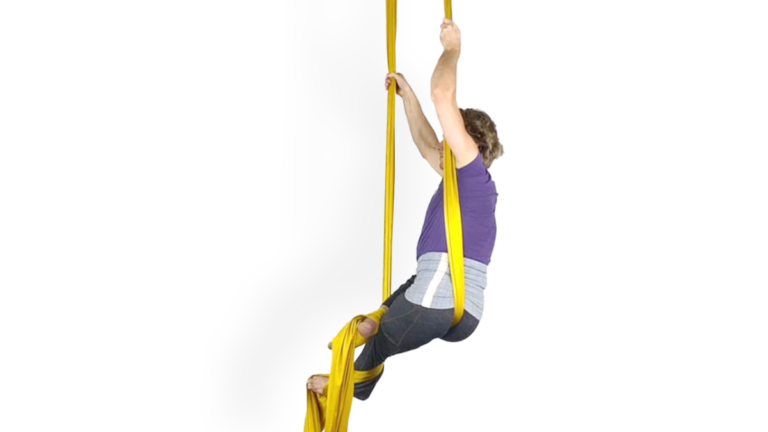
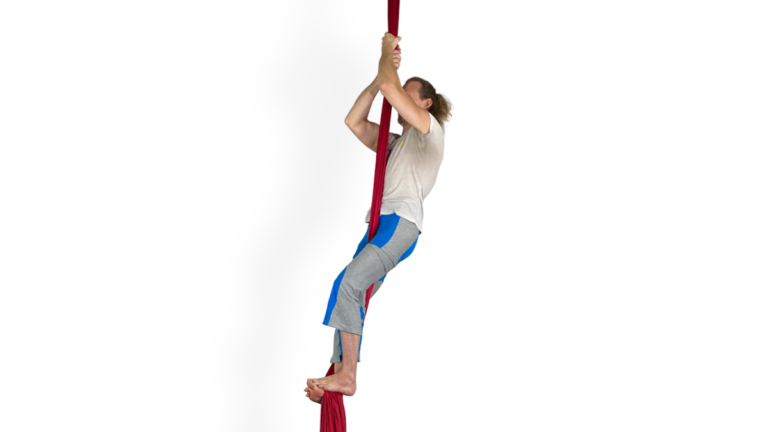
A simple example of this are the different climbs. If we have a student in class who is way beyond the other students in one particular climb that we’re teaching, then we will give them a more difficult variation, rather than have them move on to other skills.


Level 1 |
Climbs

*Paid members and trial members will be able to click through and watch all of the content in these tutorials.

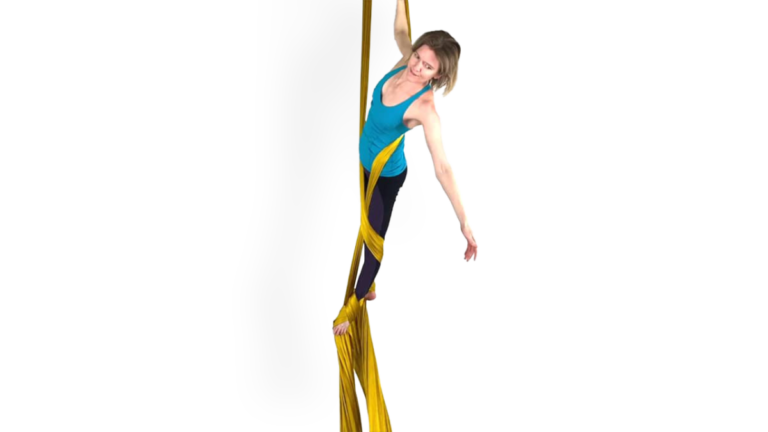
Or in Silks, if the class is working on a Crossback Straddle entrance, but one student already knows it really well, we may have them work on a different crossback straddle entrance that shares similarities with this one. These are all fairly simple examples of how we use variations to help keep a class working together as a cohesive group.

Level 2 |
Footlocks

Sequencing and Choreography

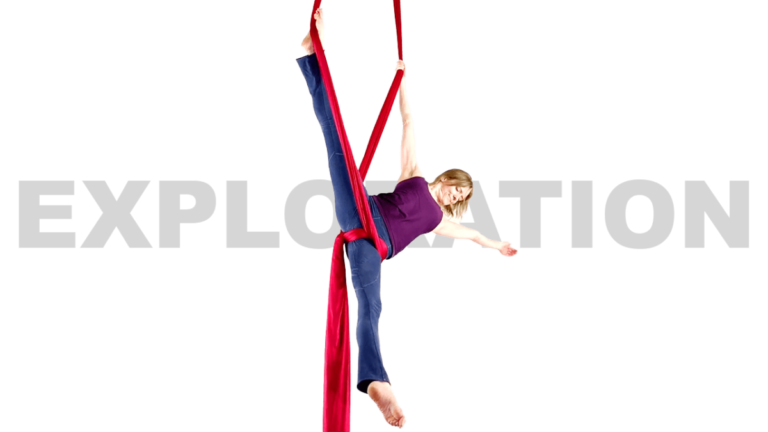
Variations can help connect two skills. Or variations can help solve issues like needing to be on the opposite leg to connect to the next skill. Oftentimes doing a skill just a little bit differently opens up new avenues for exploration and can make choreography incredibly unique.

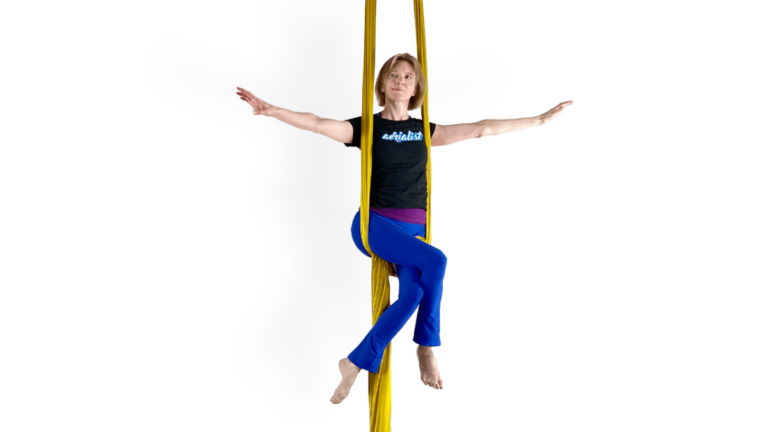
Every skill has different variations that can be explored. Like the name implies, these add variety and fun.

Level 2 |
Keys
Level 2 |
Sequence
Level 2 |
Sequence

TO BE CONTINUED…

Variations are the beginning of forward looking teaching. In the next article we are going to be exploring Next Steps and how knowing what is coming up next is a powerful tool to focus on what is important now.

Aerial Fit Online Members see all of these connections when they’re logged into any skill’s page.

Simplifying the complexity of teaching and training aerial

Check out all of the articles we have on making aerial more fun and faster to learn. All of these concepts are a part of how we approach aerial and how we present our tutorials.

  1. Making Connections to Simplify the Complexity of Aerial: Building Blocks – Understanding the prerequisites and building blocks of each skill means that students are set up to succeed.
  2. Solving Problems Before They Start: Common Mistakes – Knowing the mistakes and problems that are likely to happen makes it easier to progress more quickly with less frustration.
  3. Having Fun Troubleshooting: Related Skills & Drills – Aerial is hard, but that doesn’t mean we can’t have fun overcoming the challenges that arise along the way.
  4. Bring it to the Floor: Ground Drills for Aerial – It is amazing how much of the aerial journey can be facilitated by using clever ground drills.
  5. Add a Little Spice: Variations for Aerial – Knowing different variations makes it easer to adjust and adapt to more situations.
  6. Planning Ahead: Next Steps & Future Goals for Aerialists – Having a clear vision of where you are heading makes the journey much more enjoyable.
  7. Teaching with Purpose: Sequences Part 1 – “Teaching Sequences” help students learn technique and important aerial concepts.
  8. Creativity with Confidence: Sequences Part 2 – “Performance Sequences” help students become better performers and connect with their audience.


All of the tutorials in our Aerial Fit Online resource include these cross-references. Our website isn’t just a list of skills, rather it is set up exactly like our teachers’ brain. Everything is interconnected in a vast web of options and paths to help guide aerialists toward easier success with their goals.


Make your life simpler, Join Now!

All of our memberships, start with a low cost one week trial period that gives you full access to the membership. You can cancel anytime. Still not sure? We also offer a no credit card required Free Membership.

Leave a Reply

Your email address will not be published. Required fields are marked *