In the last article we talked about Related Drills, and finding different ways to move forward, around, and through the material we’re teaching. One obvious way to simplify the complexity of aerial is to take the aerial out of the equation (temporarily) and look at actions and pathways on the ground.
You’ve probably heard the phrase Floor-ials. This sometimes means “I’m too tired sweaty unmotivated meh, so I’m just gonna roll around on the floor.” No judgement, we’ve been there too. BUT Floor-ials or ground drills are also one of our favorite go-to techniques for making learning new skills easier or breaking through plateaus in old nemesis skills.
There are so many ways to use ground drills in aerial…let’s get into it!
We always start every aerial session with a complete ground warm-up. This is when we prep the bodies for aerial and it’s when we as teachers first begin to observe how our students are moving and how they are listening on any particular day. It’s not uncommon that we’ll modify our class plan on the fly based on what we see in the ground warm-up! Ground warm-ups are so important and have so much potential to set the stage for a successful class or training session.
Since aerial is a full body activity we always warm up the full body. And we always put particular emphasis on shoulders, core, and hips, since those areas are particularly challenged and worked in aerial. Beyond that, our ground warm-up is influenced by whatever skills we plan to teach that day.
Are we teaching a splits-heavy class? Then we’ll need to put extra focus on warming up the active flexibility in our hips and hamstrings. Are we teaching a class with a lot of straight arm hangs? Then we’ll need to put even extra emphasis on warming up the overhead range of motion in our shoulders.
We teach our instructors to always have a class plan. The plans should incorporate which students will be in class (or who might be new to them), what the students worked on in the last class and how successful they were, what they hope to cover in this class, and what they are planning on accomplishing over the next several months. Prepared with this information, teachers can come up with really effective pre-class warm ups.
Then of course, observing students doing the warm ups is how we begin to evaluate if our plan is actually realistic and whether it needs to be modified.
If a student is having a weak day (perhaps their grip feels weak or their knee pinch isn’t as strong) it is possible they didn’t warm up that body part enough. Have them do more targeted and active warm ups, or review easier skills until they are fully warmed up and then consider coming back to the planned material.

The way we think about ground drills goes much deeper than just the pre-class warm up. When we are working on the apparatus, we can break out specific physical actions that we use in the air and practice them on the ground. Breaking it down on the floor helps students to learn more about what the skill requires in the air, but without the added complexity and exhaustion of being in the air. For example,
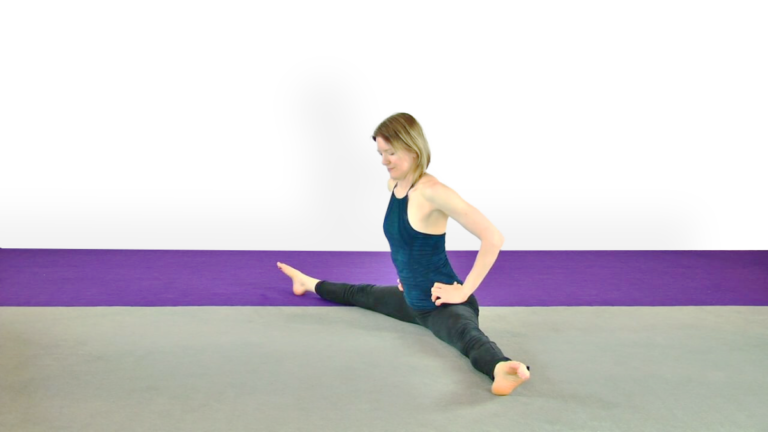
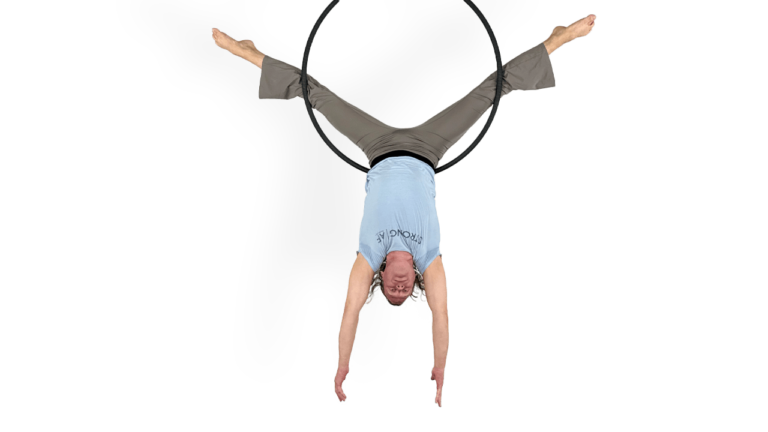
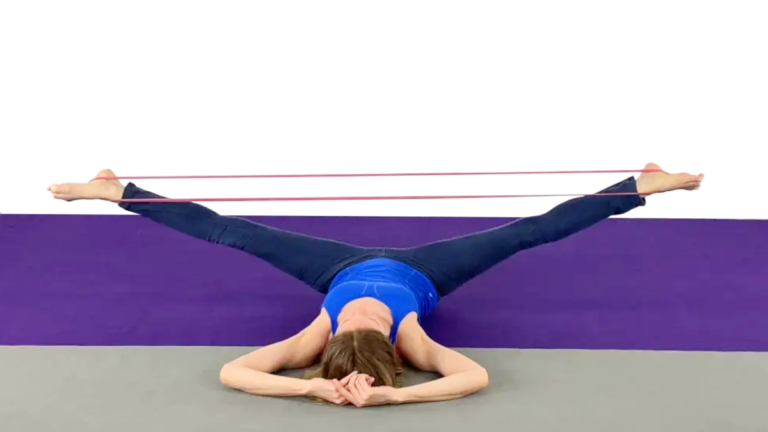
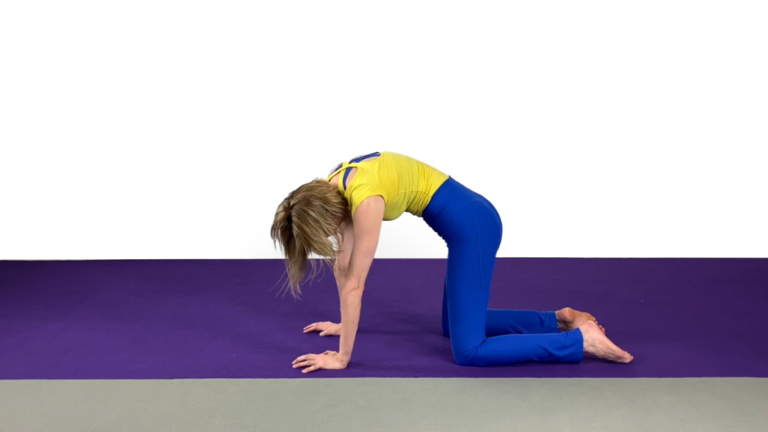
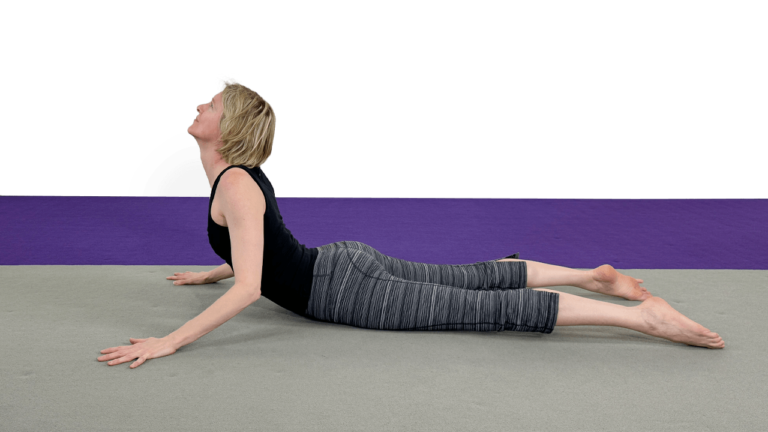
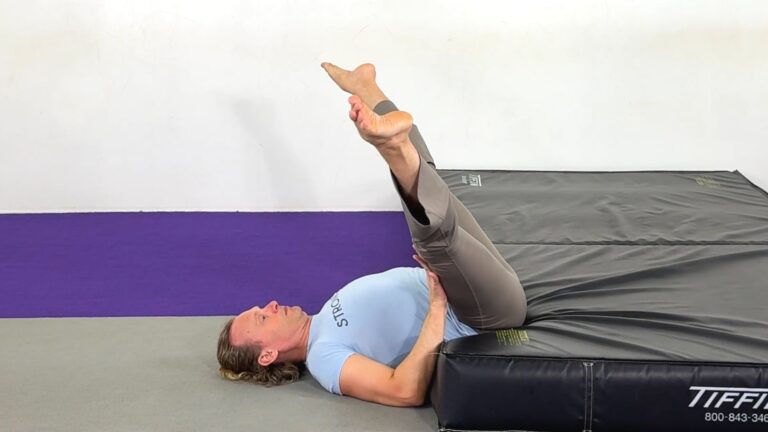
If we’re planning to teach Straddle Back Balance on aerial hoop, then we can include these following drills in our warm-up.
* Aerial Fit Online paid members can click through and see all of these connections when they’re logged into any skill’s page. At the time of the release of this post, Straddle Back Balance was a sample skill available to our free members.
Then we may move on to other class material like a general aerial warm up and reviewing skills that are part of our related drills. Then when it is time to start teaching Straddle Back Balance, we’ll have all of the students come to the floor and work on recreating the muscle actions on the floor.
Holding a safe and locked in Straddle Back Balance is a very active position. The hips, core, and lower back engage to create a butt shelf which tilts the pelvis forward, but then the abs and legs contract to bring the legs forward to connect strongly with the hoop. Doing each of these actions makes doing the other action harder. They feel a little contradictory, which can make it feel nonintuitive or confusing to students. We want them to experience the range and intensity of effort on the floor, before they have to rely on it on the apparatus.
We then can combine all of this prep work into a very successful learning experience. When it is time for students to try the skill in the air we will say something like, “Remember that engagement you discovered in the Straddle Press-Outs drill? Try to recreate it in the air now. Remember the effort in the ground drill? Work just as hard on the apparatus.”
Do you see how a student who has already tapped into these muscles and actions will be set up to more quickly succeed in the air?
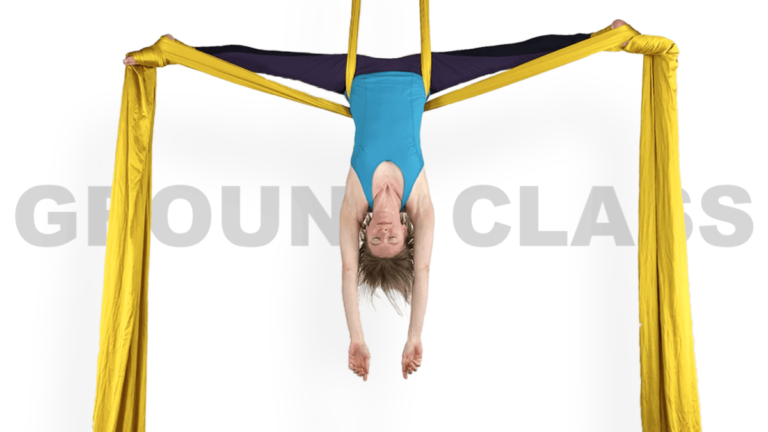
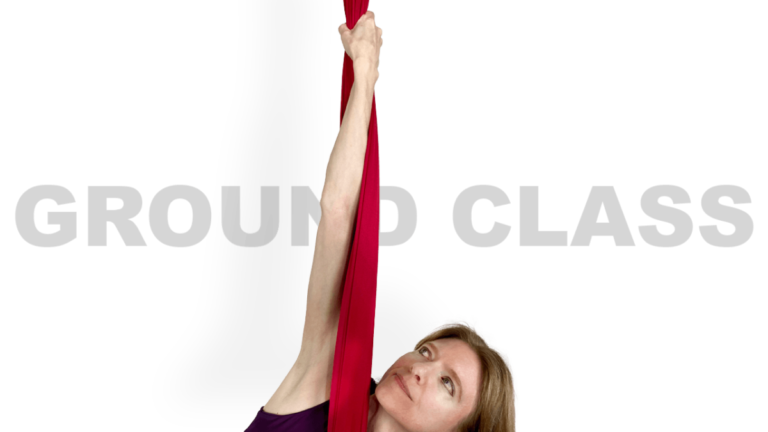
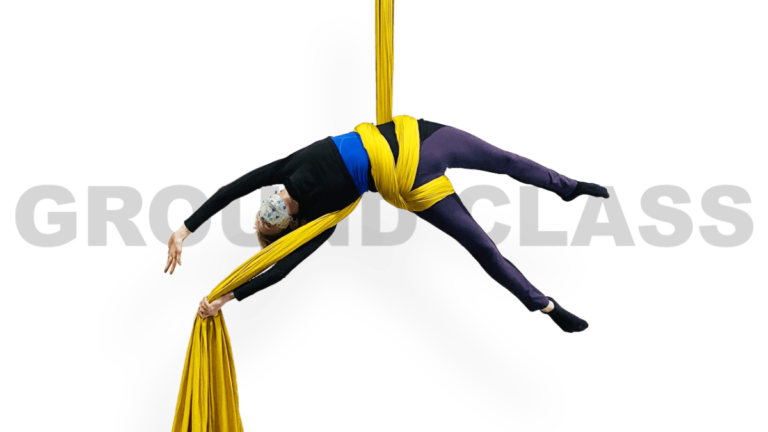
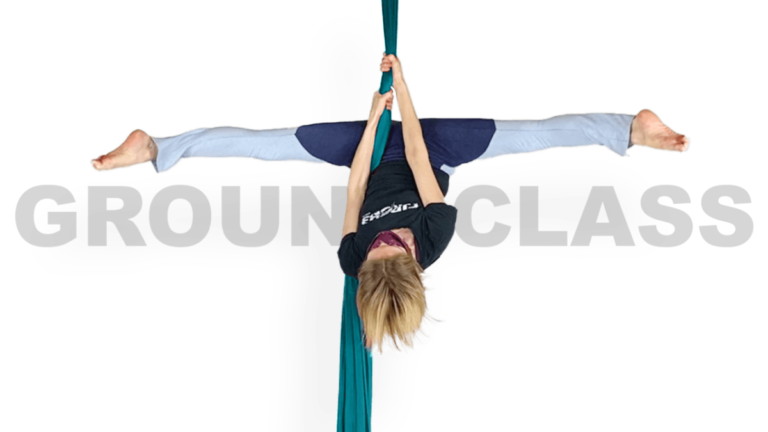
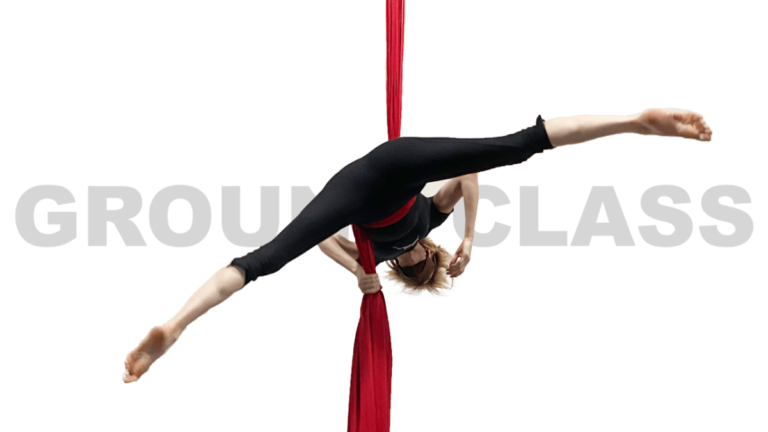
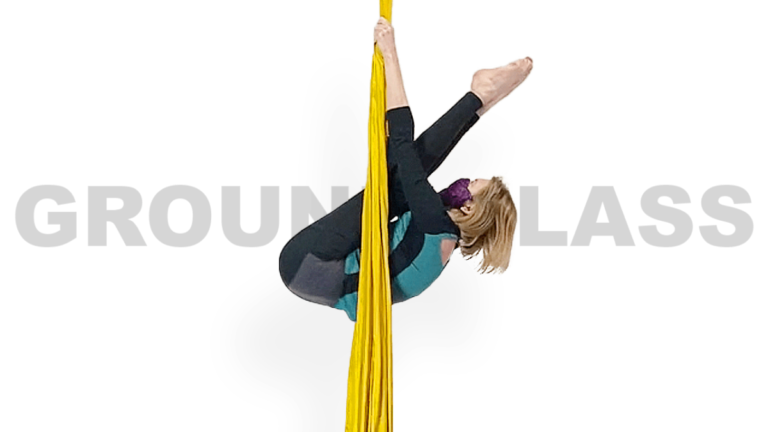
Over the years we’ve seen so many “A-ha” moments come from ground drills like this, that when covid hit we were inspired to create full-length ground classes themed around specific aerial skills. These classes kept our students entertained and inspired while the studio was closed, and since then they’ve helped aerialists break through plateaus with their nemesis skills. Each of these classes requires no aerial equipment and is full of drills that relate directly to the skill they are themed around.
Here’s a selection of our most popular Ground Classes:
Ground Drills are only one of the many connections we use in our teaching. In the next article we’ll continue this series by diving into our method for making the most of Variations of skills into our aerial teaching process.
Aerial Fit Online Members see all of these connections when they’re logged into any skill’s page.
Check out all of the articles we have on making aerial more fun and faster to learn. All of these concepts are a part of how we approach aerial and how we present our tutorials.
All of the tutorials in our Aerial Fit Online resource include these cross-references. Our website isn’t just a list of skills, rather it is set up exactly like our teachers’ brain. Everything is interconnected in a vast web of options and paths to help guide aerialists toward easier success with their goals.
Make your life simpler, Join Now!
All of our memberships, start with a low cost one week trial period that gives you full access to the membership. You can cancel anytime. Still not sure? We also offer a no credit card required Free Membership.